
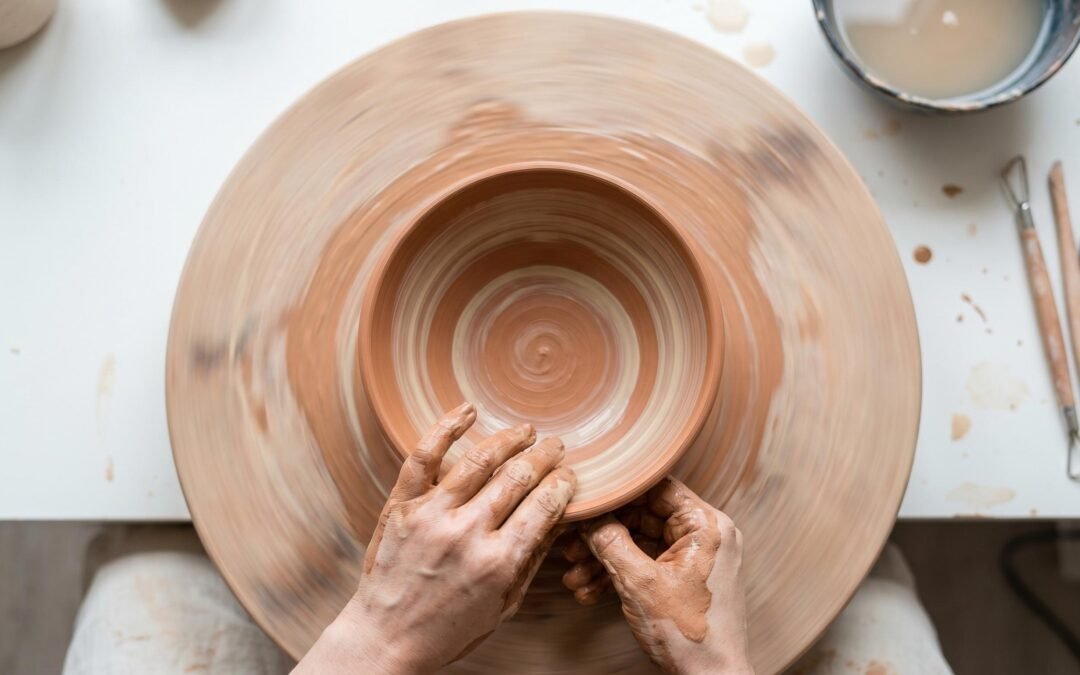
How to Make a Pottery Bowl: Wheel-Thrown and Hand-Built Methods
To make a pottery bowl, you can either throw it on a pottery wheel or build it by hand using the pinch method. Wheel-throwing involves centering wedged clay, opening a floor, and pulling up walls before shaping the rim. Hand-building requires only your fingers, a ball of clay, and patience. Both methods finish with drying, bisque firing, glazing, and a final glaze firing.
Making your first pottery bowl is one of the most rewarding projects in ceramics, and the good news is that you do not need a fully equipped studio to get started. This guide walks you through two beginner-friendly methods, throwing on the wheel and shaping a pinch bowl by hand, so you can pick the path that matches your space, budget, and curiosity. By the end, you will know exactly how to take a lump of clay and turn it into a bowl you will be proud to use at your breakfast table.
Which Method Is Right for You?
Before you reach for the clay, it helps to think about which method suits your situation. Both produce beautiful bowls, but they require different equipment, skills, and time commitments. The comparison below should help you decide.
| Wheel-Thrown Bowl | Hand-Built Pinch Bowl | |
|---|---|---|
| Equipment needed | Pottery wheel, ribs, wire tool, sponge, trimming tools, bats | Just clay, a smooth surface, a damp sponge, and a cloth |
| Skill level | Moderate, with a learning curve around centering | Beginner-friendly, achievable in your first session |
| Time required | 30 to 60 minutes to throw, plus trimming and drying days | 20 to 40 minutes to shape, plus drying days |
| Best for | Even walls, larger bowls, sets that match in size | Sculptural shapes, kids, classrooms, travel kits, tight budgets |
| Shape control | High, with practice; symmetrical curves are easier | Lower; each bowl has organic character |
| Consistency of output | Strong once technique is dialed in | Each piece is delightfully one of a kind |
If you have access to a wheel through a community studio or a friend, throwing is worth learning because it opens the door to a wider range of forms. If you are working at the kitchen table with a single block of clay, the pinch bowl method is a complete and satisfying way to make a real, usable piece of pottery. Many potters do both, and we suggest you try each at least once before deciding which feels more like yours.
What You’ll Need
Your shopping list depends on which method you choose. Beginners often overbuy tools, so start with the essentials below and add to your kit as you develop preferences. If you are still picking out a clay body, our guide to the best pottery clay for beginners walks through the most forgiving options. For a broader rundown of the small items that genuinely earn their place on the bench, see our list of pottery tools for beginners.
For wheel-throwing
- A pottery wheel, electric or kick, with a splash pan
- About 1 to 1.5 pounds of smooth stoneware or earthenware clay per bowl
- A wire tool for cutting the bowl off the wheel head
- One flexible metal or rubber rib, plus a wooden rib for shaping
- A natural sponge and a small bucket of clean water
- A needle tool for trimming the rim
- A loop or ribbon trimming tool for finishing the foot
- A bat or two so you can lift the wet bowl off the wheel without warping it
For hand-building (pinch bowl)
- About half a pound of clay, the same kinds used for wheel work
- A clean, smooth work surface, such as a canvas mat or a sealed wooden board
- A small damp sponge
- A wooden rib or the back of a spoon for smoothing
- A soft cloth or piece of foam for drying the bowl upside down
A note on clay selection. Most beginners do well with a mid-fire stoneware in the cone 5 to 6 range, which is durable, food-safe when properly glazed, and forgiving on the wheel. Low-fire earthenware is a friendly second option, especially for hand-builders, because it cracks less during drying. To compare these clay bodies in depth, read our overview of different types of pottery clay.
How to Make a Pottery Bowl on the Wheel
Throwing on the wheel can feel intimidating the first time, but it really is just a sequence of small, repeatable moves. Take your time with each step, breathe out as you press, and remember that your first ten bowls are practice. The eleventh is where the magic often begins.
-
Prepare and wedge your clay. Cut a 1 to 1.5 pound chunk of clay, weighing it on a kitchen scale so your bowls come out a consistent size. Wedge the clay for two to three minutes to remove air bubbles and align the clay particles, which makes centering easier and reduces cracking later. If you have never done this before, our step-by-step guide on how to wedge clay shows the ram’s head and spiral methods clearly. Finish by patting the clay into a smooth, round ball with no creases on the bottom.
-
Center the clay on the wheel. Slap the ball firmly onto the middle of a damp wheel head or bat so it sticks without slipping. Start the wheel at a high speed, wet your hands, and brace your elbows against your hips or thighs for stability. Cup the clay with both hands and press inward and slightly down, holding pressure steady until the clay stops wobbling. The clay should feel like a still, smooth dome under your palms, not a wave pushing back at you.
Common mistake callout: letting your hands shake or float. Most centering struggles come from unsupported arms, not weak hands. Anchor your forearms against your body, keep the wheel spinning fast, and let the wheel do the work as your hands simply hold a steady shape.
-
Open the clay to create the floor. With the wheel still moving at a medium speed, press both thumbs, or a single steady finger, straight down into the center of the dome. Stop about a quarter inch above the wheel head; this becomes the floor of your bowl. Then pull your fingers gently outward to widen the opening into a flat, even base. Check the floor thickness with a needle tool by poking down until it touches the bat, then measuring the depth on the needle with your thumbnail.
-
Pull up the walls. Slow the wheel down to a comfortable pace, around 100 rpm, and place one hand inside the bowl with the other braced against the outside. Using the knuckle of your outside index finger and the pad of your inside fingers, gently squeeze the clay and lift slowly from the base toward the rim. Each pull thins the wall and raises it; usually three pulls are enough for a beginner bowl. Keep your hands wet but not soaked, since too much water weakens the clay and invites collapse.
Common mistake callout: pulling too fast or too hard. Beginners often rush this step and end up with thin spots or torn rims. Move your hands upward in a slow, continuous motion that takes a full five to eight seconds from bottom to top, and lighten your pressure as you near the rim where the clay is thinnest.
-
Shape the bowl. Once your walls are pulled to roughly even thickness, decide on a profile. For a classic cereal bowl, press gently outward from the inside with your fingers while supporting the outside with a rib, easing the wall into a gentle curve. For a wider, flared salad bowl, push the rim out a little farther in the final shaping pass. Go slowly and stop the wheel often to look at the silhouette from the side.
-
Refine the rim. Steady the rim between two fingers on the outside and one finger on top, letting the wheel rotate one full turn so the clay smooths under your touch. A small piece of soft leather or chamois pressed lightly on the rim gives it a beautifully rounded finish. If the rim is uneven, hold a needle tool against it as the wheel spins, then lift the cut ring of clay away cleanly.
-
Wire off the wheel. Use a clean sponge to soak up any standing water from inside the bowl, then stop the wheel. Hold the wire tool taut and pull it straight across the wheel head, just under the base of the bowl, in one smooth motion. If you threw on a bat, simply lift the bat off the wheel and set it aside to let the bowl firm up; if you threw directly on the wheel head, slide your hands under the bowl gently and move it to a board.
-
Let dry to leather-hard. Cover the bowl loosely with a plastic bag and let it sit for several hours or overnight, until the clay feels cool and firm but is still cuttable with a knife. This stage is called leather-hard, and it is the right moment to trim. If the bowl gets too dry before you trim, you can wrap it in damp paper towels and a plastic bag for a few hours to recover some moisture.
-
Trim the foot ring. Flip the bowl upside down and re-center it on the wheel, securing it with three small coils of soft clay around the edge. Spin the wheel slowly and use a loop or ribbon tool to carve away excess clay from the base, shaping a foot ring that lifts the bowl off the table. The foot should be roughly one third the diameter of the bowl, with walls of similar thickness to the rest of the piece. Sign your name or stamp the bottom while you are there.
-
Dry completely before bisque firing. Set the trimmed bowl on a wire rack or open shelf and let it dry slowly, ideally over three to seven days. Cover it loosely with plastic for the first day or two if your studio is dry, then uncover for the rest. The bowl is bone dry, and ready for its first firing, when it feels room temperature against your cheek and lighter than you expect.
How to Make a Pottery Bowl by Hand (Pinch Bowl Method)
The pinch bowl is the oldest pottery form in the world, and it remains a wonderful place to start. With no machinery between you and the clay, you learn to feel moisture, thickness, and shape directly through your fingertips. Set aside a quiet hour and try not to overthink the result.
-
Weigh and round clay into a ball. Cut about half a pound of clay, roughly the size of a small orange, and weigh it if you want a matching set later. Wedge it briefly to remove any trapped air, then roll it between your palms into a smooth, round ball with no cracks on the surface. A small ball makes a teacup-sized bowl; for a cereal bowl, work with closer to a pound.
-
Push your thumb into the center. Cradle the ball in one palm and press your other thumb straight down into the middle, stopping about a quarter inch from the bottom. The hole you make is the start of the interior, and the clay still surrounding your thumb is the future wall. Try to keep the hole perfectly centered; an off-center opening creates uneven walls later on.
-
Pinch and rotate to build walls evenly. With the bowl resting on your palm, use the thumb on the inside and the index and middle fingers on the outside to pinch the wall gently. Rotate the bowl a quarter turn after each pinch and work in steady rings, starting at the base and spiraling up toward the rim. Resist the urge to thin one section all the way before moving on; one even pass around the whole bowl beats deep work in one spot. Aim for walls about a quarter inch thick.
-
Shape and refine the opening. Once the walls are even, decide whether you want a rounded teacup shape, a wide flared bowl, or something in between. Press gently outward at the rim to flare it, or curve your fingers inward to close the form. Tap the base lightly on the table every few minutes to keep it flat and stable, which prevents wobbling later.
-
Smooth the surface with a damp sponge. Wring out a sponge so it is barely wet, then run it over the inside and outside of the bowl in slow circles. The sponge fills in tiny pinch marks while keeping the organic texture of handwork. If you prefer a sharper finish, use a wooden rib or the curve of a spoon to burnish the surface once it is slightly firmer.
-
Dry upside down on soft cloth. Place the bowl rim-down on a soft cloth or piece of foam so the opening keeps its round shape as it dries. Cover it loosely with plastic for the first day, then uncover and let it air dry slowly for several more days. Slow drying is the single most important habit for crack-free pinch bowls.
-
Smooth the foot when leather-hard. Once the bowl is firm but still slightly cool to the touch, turn it right-side up and clean any sharp edges with a damp finger or a small metal rib. You can carve a shallow foot ring with a loop tool if you want a lifted base, or simply round the bottom edge for a smooth, low-profile look. Sign the underside with your initials and the date.
Firing and Glazing Your Pottery Bowl
Once your bowl is fully dry, it still needs to be fired and glazed to become a usable piece. Most studio bowls go through two firings: a first bisque firing that hardens the clay into a porous, paintable state, and a second glaze firing that melts the glass coating onto the surface. If you are new to kiln work, our walkthrough on how to fire pottery covers the schedule, ventilation, and safety basics. For a deeper look at why two firings are standard practice, see can you fire pottery twice.
Bisque firing usually runs to cone 06, around 1830 degrees Fahrenheit, regardless of the final clay body. After bisque, you can apply glaze by dipping, brushing, or pouring. Cover the entire inside of the bowl and the rim, since these surfaces will touch food. Leave the bottom and the foot ring bare so the bowl does not fuse to the kiln shelf during firing, and wipe any drips off the foot with a damp sponge before loading. The American Ceramics Society offers a clear primer on glaze chemistry and food safety at Ceramic Arts Network, which is worth bookmarking once you start mixing your own glazes.
The glaze firing temperature depends on your clay. Low-fire earthenware tops out around cone 04, mid-fire stoneware fires to cone 5 or 6, and high-fire stoneware or porcelain runs to cone 10. Match the glaze rating to the clay rating, or your surface will either underfire and stay rough or overfire and run off the pot. For more on choosing and applying glaze, our pottery glazing for beginners guide breaks down each method with photos. For broader background on clay properties and firing ranges, the educational pages from the National Council on Education for the Ceramic Arts are a trusted resource.
Common Beginner Mistakes
Every potter, including the ones with packed studio sales, has made all of these. Spot them early and your second bowl will already be much better than your first.
- Uneven walls. Thick spots near the bottom and paper-thin rims are the classic sign of pulling too fast on the wheel or pinching too aggressively in one area. Slow your hands, use your fingers as calipers, and pause often to check thickness from the inside and outside.
- Cracks during drying. Cracks usually mean the bowl dried too quickly or unevenly, especially around the rim and foot. Cover work loosely with plastic for the first day, then let it air dry slowly on a rack away from heaters, drafts, and direct sun.
- Bowl collapsing on the wheel. A floppy, leaning bowl is almost always a water issue. Sponge out standing water after every pull, keep your hands damp rather than dripping, and recenter your wall with a rib if it starts to wobble before you continue pulling.
- Glaze pooling at the bottom. When too much glaze settles inside, it can crack the bowl or pop free in firing. Pour glaze into the bowl, swirl quickly, and pour out within three seconds; for outside coverage, dip rather than slather.
- Skipping the foot ring trim. An untrimmed base feels heavy and looks unfinished, and it can crack as the thicker mass dries unevenly. Even a simple beveled edge improves the balance and aesthetics of any bowl.
- Throwing or pinching with cold, dry hands. Cold hands grip the clay too tightly and pull moisture out unpredictably. Warm your hands under the tap for a few seconds before each new piece; we suggest a small bowl of warm water nearby on chilly studio days.
Frequently Asked Questions
How long does it take to make a pottery bowl?
Active making time is short, roughly 20 to 40 minutes for a pinch bowl and 30 to 60 minutes for a wheel-thrown bowl plus trimming. Drying takes three to seven days, and a typical bisque-then-glaze firing cycle adds another two to four days of kiln time. From start to finished, food-safe bowl, plan for one to two weeks.
What type of clay is best for making a pottery bowl?
Mid-fire stoneware in the cone 5 to 6 range is a strong default because it is durable, food-safe with the right glaze, and forgiving for beginners. Low-fire earthenware is friendlier on the wheel and easier to dry without cracks, but it is more porous and less chip-resistant. For most home potters, we suggest starting with a smooth mid-fire stoneware.
Can you make a pottery bowl without a kiln?
Yes. You can pit fire, raku fire in a small backyard setup, or use a paper kiln to fire small bowls at lower temperatures, though these methods produce decorative rather than fully food-safe ware. For a full walkthrough of these alternatives, read our guide on how to fire pottery without a kiln. Air-dry clay is another option for purely decorative bowls, though it cannot hold water or food long-term.
How thick should pottery bowl walls be?
Aim for walls between a quarter inch and three eighths of an inch thick, with a slightly thicker base for stability. Walls thinner than an eighth of an inch are fragile in the kiln and prone to warping; walls thicker than half an inch dry unevenly and risk cracking. Consistency matters more than exact thickness.
How do I prevent my pottery bowl from cracking?
Three habits prevent almost all cracks. Wedge your clay thoroughly so there are no air bubbles, dry your bowl slowly and evenly under loose plastic for the first day, and avoid sudden thickness changes between walls, rim, and foot. If you live in a dry climate, cover finished work with a sheet of plastic with a few small holes punched in it.
Can beginners make pottery bowls at home?
Absolutely. A pinch bowl needs only a half pound of clay, a clean table, and your hands, which makes pottery accessible in any kitchen or balcony. If you want to throw on a wheel, look for beginner classes at a local studio or community college first to learn centering, then graduate to a tabletop wheel at home once you are comfortable. Many of our customers made their first bowl on a folded towel at the kitchen counter.