
Best Pottery Clay for Beginners: What to Buy and Why It Matters
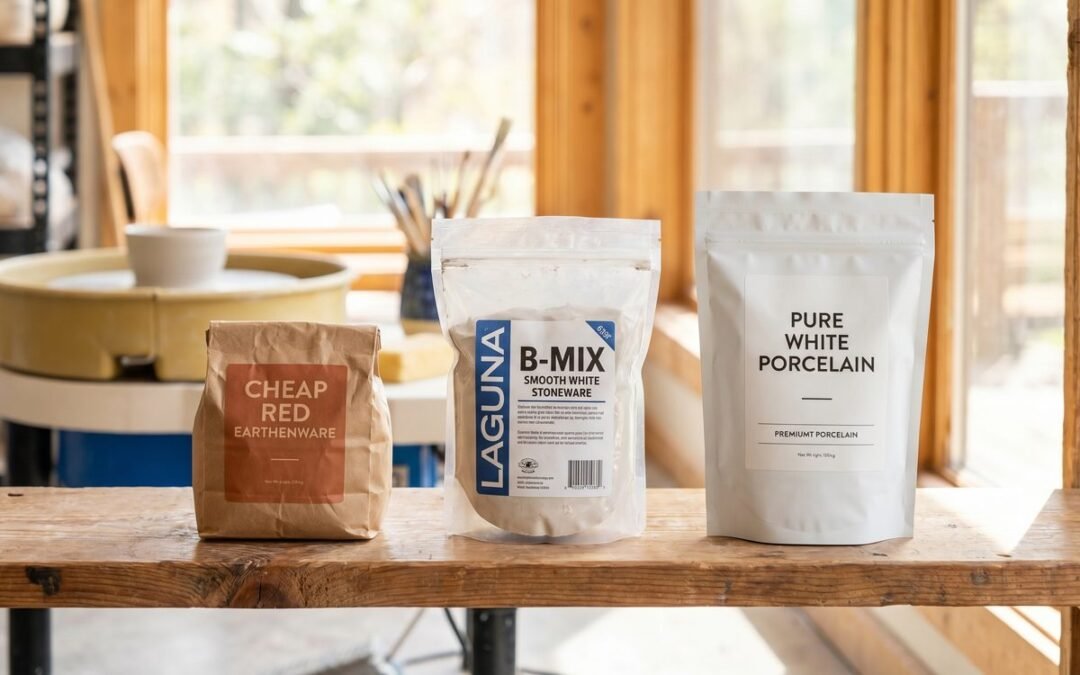
The best pottery clay for beginners is a smooth mid-fire stoneware like Laguna B-Mix 5, because it forgives mistakes on the wheel and holds its shape during hand building. But the truly right answer depends on what you’re making and what kiln you have access to. Wheel throwers, hand builders, and sculptors each have a different best choice.
Why Most Beginners Pick the Wrong Clay
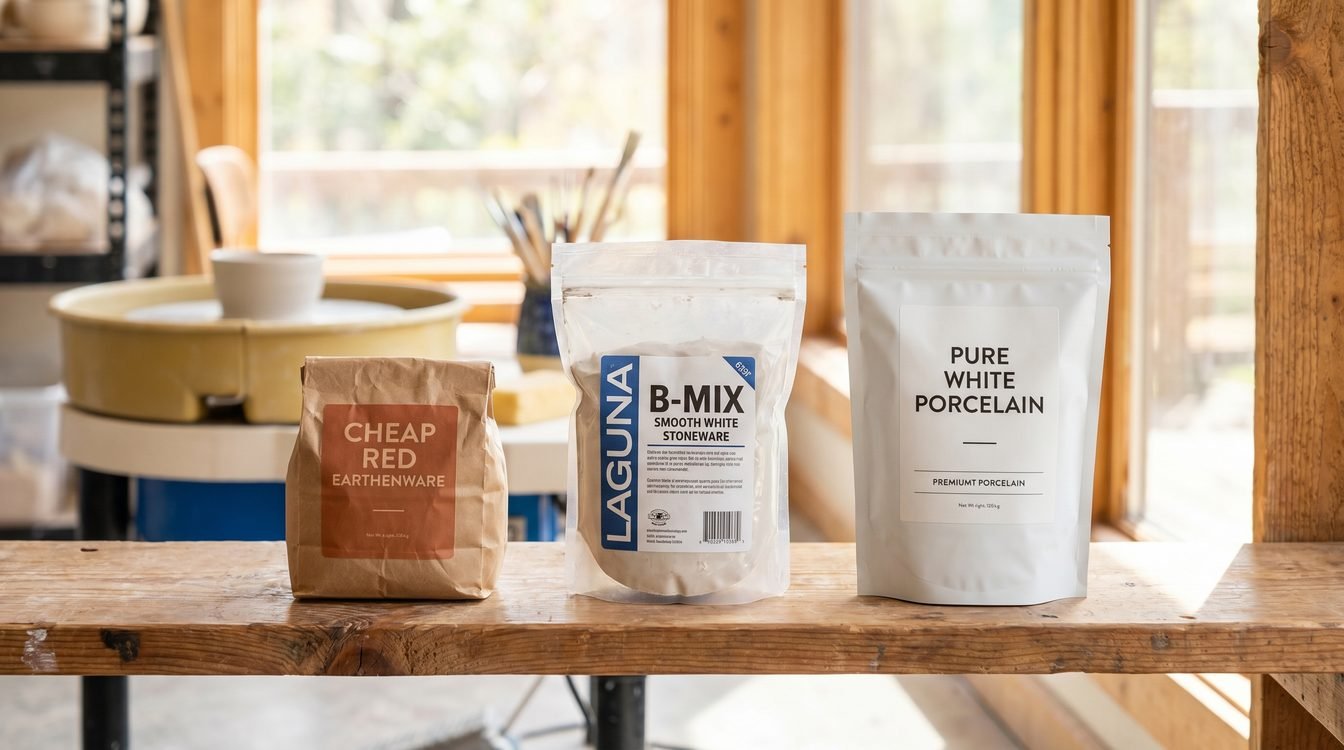
Walk into any pottery supply shop with a brand new student, and you can almost predict the mistake. They reach for porcelain because it sounds elegant. Or they grab whatever bag is cheapest. Sometimes they buy the clay their favorite YouTube potter uses, without checking whether their local studio’s kiln can even fire it.
None of these strategies work. Porcelain punishes new throwers with its short memory and slumping. Bargain-bin clay often comes loaded with coarse grog that tears up unprepared hands. And buying clay rated for cone 10 reduction when your community studio fires to cone 6 oxidation is a fast way to ruin a kiln load.
The fix is simple. Stop shopping by clay type. Start shopping by what you actually want to make, and confirm it matches the kiln you’ll be using. Everything below is organized that way.
The Three Main Types of Pottery Clay
Before the buying guide, a quick orientation. Almost every clay you’ll encounter as a beginner falls into one of three families. You can read a deeper breakdown of the different types of pottery clay and their uses on our companion guide, but here is the short version you need to make a smart purchase.
Earthenware
Earthenware is low-fire clay, typically maturing between cone 06 and cone 02. It is the terracotta family: warm reds, oranges, and buffs that stay porous after firing. Earthenware is the most forgiving body for beginners, slumps less during drying, and matches the cone range of nearly every school and community workshop kiln. It is also the cheapest clay you can buy by the pound.
Stoneware
Stoneware fires hotter, between cone 5 and cone 10, and vitrifies into a dense, durable body that holds water without glaze. For most beginners this is the sweet spot. It throws well, hand builds well, takes glaze beautifully, and produces functional ware you can actually use at the dinner table. If you can only buy one bag, a smooth mid-fire stoneware is the safest pick.
Porcelain
Porcelain is the bright white, translucent clay everyone wants to work with. It is also the least forgiving. The particles are tiny, the working window is short, and it slumps fast on the wheel. We suggest skipping it until you have at least 50 hours of throwing time under your belt. The frustration is real, and it tends to push new potters out of the studio entirely.
Choose Your Clay by What You’re Making
Here is where most buying guides go sideways. They drop you into a clay taxonomy lesson and expect you to translate “iron-bearing mid-range stoneware” into “the bag I should buy for the mug I want to throw next Saturday.” That translation is the whole job.
Instead of starting with clay type, start with the object in your head. Are you sitting at a wheel trying to throw a cylinder? Are you building a slab vase on the table? Are you sculpting a small figure with a kid in a Saturday class? Each of those is a different clay decision, and the table below maps the most common beginner projects to the specific bag we’d put in your cart.
| What You’re Making | Clay Type | Recommended Product | Firing Range | Grog Level | Why It Works |
|---|---|---|---|---|---|
| Wheel throwing | Stoneware | Laguna B-Mix 5 | Cone 5-6 | None (smooth) | Smooth texture, easy to center and open, forgiving for new throwers |
| Hand building (slabs, coils) | Stoneware | AMACO Buff Stoneware 46 | Cone 5-10 | Medium | Wide cone range, workable, holds its shape during construction |
| Sculpting / figures | Earthenware | Red Earthenware 417 | Cone 06-02 | Fine grog | Low fire matches school kilns, grog prevents cracking in thick forms |
| Kids / beginner classes | Earthenware | Red Earthenware 417 | Cone 06-02 | Fine grog | Affordable, available, matches most community workshop kilns |
| Mixed use (not sure yet) | Stoneware | Laguna B-Mix 5 | Cone 5-6 | None (smooth) | Works for both wheel throwing and hand building, most versatile |
The Best Beginner Pottery Clays, Reviewed
Best for Wheel Throwing: Laguna B-Mix 5
Laguna B-Mix 5 is the clay most studio instructors quietly steer new throwers toward, and for good reason. The body is smooth and white with a porcelain-like surface, but it carries the workability of a true stoneware. There is no grog to tear at your fingertips during long centering sessions, and the clay holds water in the wall without going to slop on you. It fires cream-colored in oxidation at cone 5 and takes glaze cleanly. If you’re shopping for clay alongside getting your first wheel, B-Mix is the bag we’d pair with it. Most regional clay suppliers carry it in 25-pound or 50-pound boxes.
Best for Hand Building: AMACO Buff Stoneware 46
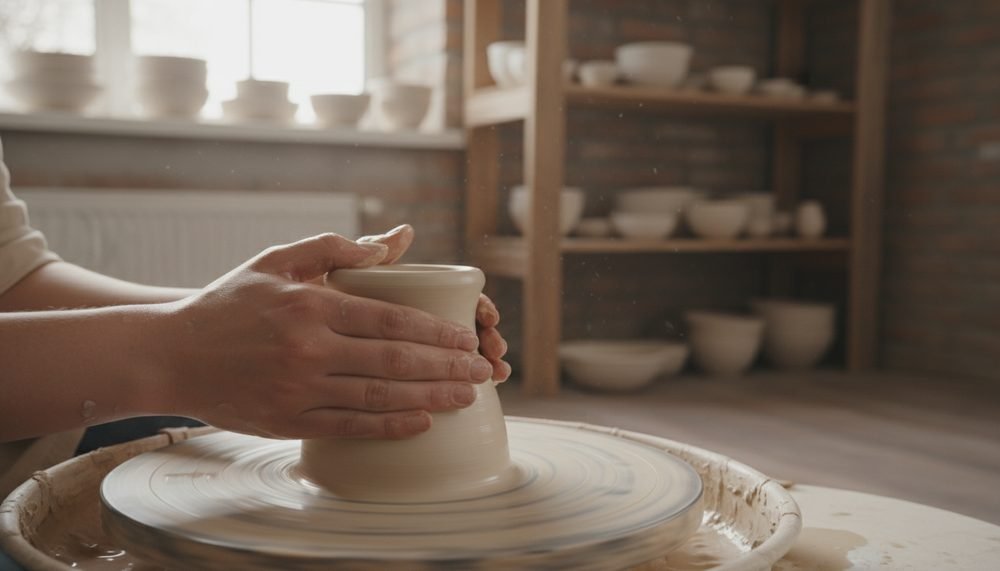
AMACO Buff Stoneware Clay 46 is the clay we suggest for anyone who wants to focus on slabs, coils, and pinch pots before sitting down at a wheel. The medium grog gives it real structural backbone, so a slab vase actually stands up while you’re attaching the seams. The cone 5 to 10 firing range is unusually wide, which means the same bag will work whether your studio fires mid-range oxidation or high-fire reduction. The buff color is warm and neutral, taking both bright commercial glazes and quieter studio glazes without fighting them. It scores and slips cleanly, which matters more than beginners realize on day one.
Best Budget Pick (and Best for School Kilns): Red Earthenware 417
If you’re teaching kids, taking a community class, or simply want the cheapest path to firing actual finished pieces, Red Earthenware 417 from The Ceramic Shop is the right call. It is low-fire earthenware in the classic terracotta range, maturing at cone 06 to 02, which is exactly where most community workshop and school kilns are set. The fine grog gives sculptural forms enough structure to dry without cracking, but it stays gentle enough that small hands aren’t fighting the clay. It’s also priced for the volume a class burns through. For the basics of firing your finished work, this is the easiest clay to learn on.
What Grog Is (And Why It Matters for Beginners)
Grog is one of those words that sounds technical and turns out to be simple. Grog is fired clay that has been ground back down into a sand-like grit, then mixed into raw clay before you ever open the bag. It does two useful things. It opens up the clay body so moisture can escape more evenly during drying, which dramatically reduces cracking. And it gives structural memory to thick forms, so your sculpture’s leg doesn’t slump while the torso is still wet.
The trade-off is texture. Coarse grog feels like beach sand against your palms, which is welcome on a hand-built sculpture and miserable during a forty-minute centering session at the wheel. Smooth or fine-grogged stoneware like B-Mix sits in the middle, and that middle is where most beginners thrive. As you start collecting the tools you use alongside your clay, you’ll notice ribs and sponges behave differently on grogged versus smooth bodies, which is another reason to start with one and stick with it.
Does Your Kiln Matter? Understanding Cone Firing for Beginners
Cone numbers confuse almost every new potter, and they shouldn’t. A cone number is a temperature target, not a quality grade. Cone 06 is cooler than cone 6, even though it looks bigger on paper. The single rule that matters more than anything else: the clay’s cone range must match the kiln you’ll be firing in. Buying cone 10 stoneware and firing it to cone 06 leaves you with a soft, porous brick that holds no water.
If you’re taking classes, ask the studio manager what cone they fire and buy clay rated for that range. If you’re buying your own kiln, stay in the cone 5 to 6 range, because that’s where most affordable digital kilns top out. Spend a few minutes properly preparing your clay before loading the kiln, because bone-dry pieces still need a slow candling to vent moisture. For readers shopping in the Pacific Northwest or buying online, Seattle Pottery Supply’s beginner clay guide is a solid regional reference.
FAQ
What type of clay is best for beginners?
Smooth mid-fire stoneware is the best all-around clay for beginners. It throws well, hand builds well, and produces durable functional ware. Laguna B-Mix 5 is the most common studio pick. If you’re working in a school or community kiln that only fires low, switch to a red earthenware like Red Earthenware 417 instead.
Is stoneware or earthenware better for beginners?
Stoneware is better for most beginners because it produces durable, watertight functional pots and works on both the wheel and the hand-building table. Earthenware is better if your kiln only fires to low temperatures, if you’re working with kids, or if you want the warmest budget option. The kiln you have access to usually decides for you.
Can beginners use porcelain clay?
Beginners can technically use porcelain, but we suggest waiting until you’ve put in at least 50 hours at the wheel. Porcelain has a very short working window, slumps easily, and cracks during drying if your technique isn’t dialed in. Most students who start on porcelain get discouraged quickly. Begin with stoneware, then graduate to porcelain once your hands know what they’re doing.
What is the best clay for hand building without a kiln?
If you don’t have access to a kiln, look for air-dry clay or a polymer clay rather than a true ceramic body. Real pottery clay must be fired to become permanent and waterproof, so an unfired stoneware or earthenware piece will simply rehydrate and crumble in water. Air-dry clays are sold at most craft stores and skip the firing step entirely.
How much does pottery clay cost for beginners?
Pottery clay typically runs between 25 and 45 dollars for a 25-pound box, depending on the clay body and your region. Red earthenware sits at the cheaper end, premium white stonewares like B-Mix at the higher end, and porcelain costs more again. A 25-pound box is enough clay to throw roughly ten to fifteen mugs, depending on size and waste.
Can you reuse clay that has dried out?
Yes, as long as the clay has not been fired. Dried scraps and trimmings can be broken into small pieces, soaked in water until they slake down into slurry, then dried back to working consistency on a plaster bat. This is called reclaiming, and most studios keep a reclaim bucket going at all times. Once clay is bisque fired, it can no longer be reclaimed.