
Why Is Pottery Important in History? Everything Worth Knowing
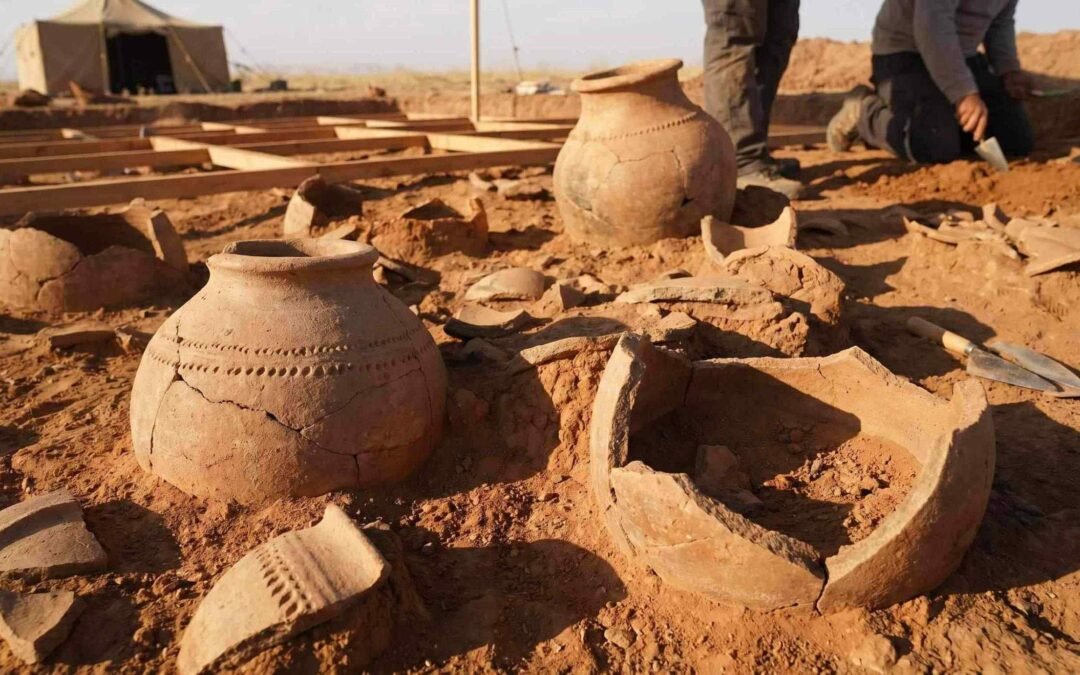
Pottery is important in history because waterproof clay vessels enabled food storage and grain surpluses that made settled civilization possible, served as cultural identifiers across continents, fueled long-distance trade networks, and carried artistic and religious meaning. Most powerfully, pottery sherds are archaeology’s primary dating tool, letting scientists pin precise dates to every layer of an excavation site.
Pottery’s First Job: Feeding Civilization
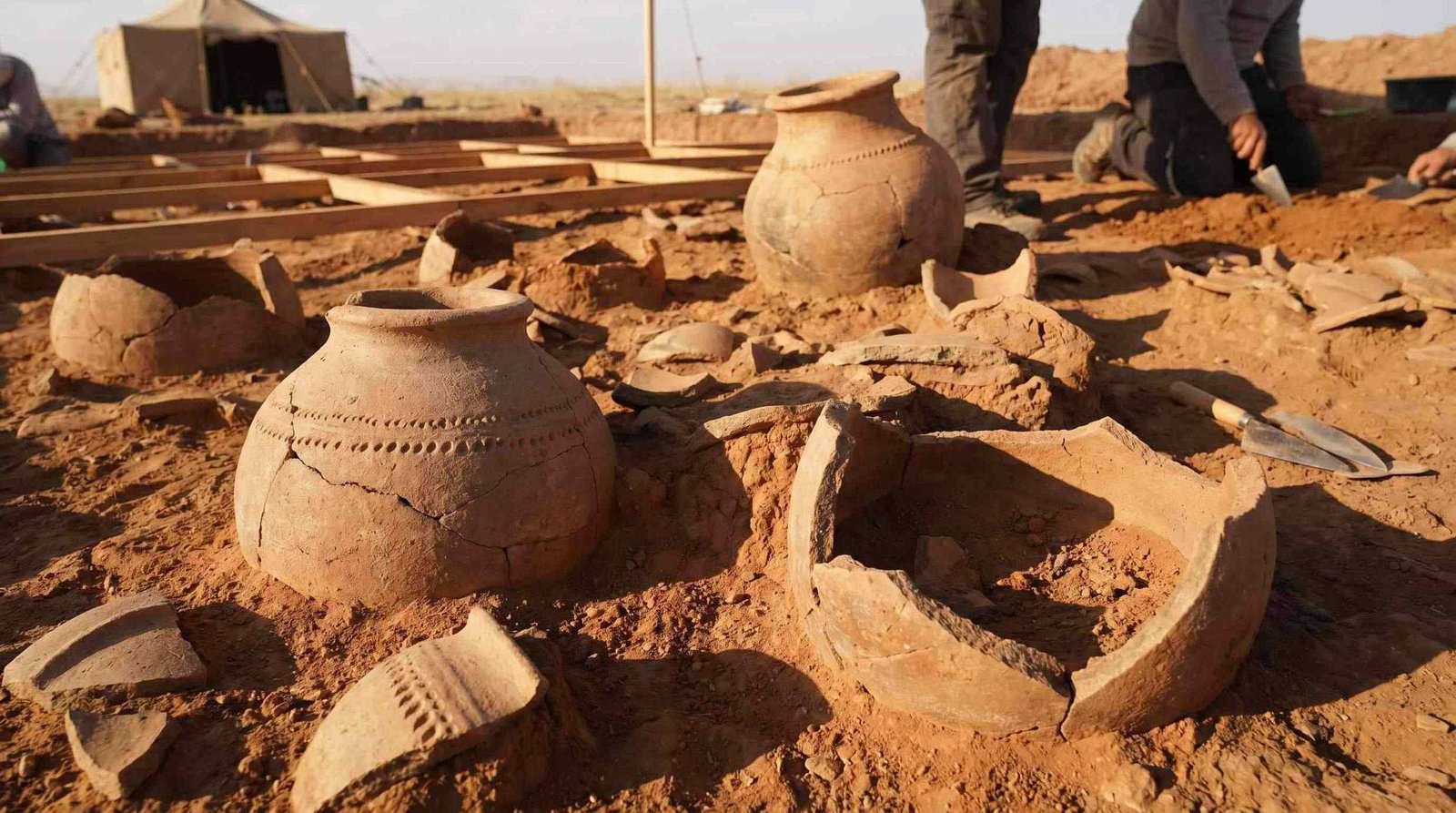
Before fired clay, our ancestors hauled water in skins, stored seeds in baskets, and cooked over open flames with little protection against spoilage. A leather pouch leaks. A reed basket cannot hold liquid. Wood scorches and splits. The arrival of waterproof ceramic vessels around 16,000 years ago in Japan, and independently in other regions over the following millennia, changed the daily math of survival. Suddenly grain could be kept dry through a wet season, water carried miles from a spring, and stews simmered slowly over coals without scorching the meat.
That single technical leap rewired human settlement. Storing surplus grain meant a community no longer needed to consume what it harvested within weeks. Surplus meant population growth, specialization, and the freedom for some people to spend their days as priests, smiths, weavers, or potters themselves rather than full-time foragers. Archaeologists studying the early Neolithic sites of the Fertile Crescent, the Yellow River Valley, and Mesoamerica all see the same pattern: pottery appears, then villages grow, then cities follow. The link is so consistent that some researchers treat the spread of pottery as a proxy marker for the rise of settled agriculture itself.
Pottery also reshaped what humans could eat. Boiled grains became porridge. Fermented liquids became beer, yogurt, and fish sauce. Tough roots and shellfish that resisted roasting became edible after long simmering in a sealed pot. Recent residue analysis on early Jomon shards has identified marine-mammal fats absorbed into the porous clay, proving that those first Japanese pots cooked fatty fish and sea creatures that would have been hard to digest raw. Pots gave us new calories, new flavors, and new patience with the food in front of us.
How Pottery Tracked the Ancient World’s Trade Routes
Pottery Styles as Cultural Fingerprints
Every pottery tradition develops a vocabulary of its own. The clay comes from local riverbeds with a unique mineral signature. The forms reflect what a community eats and how it carries water. Decoration encodes aesthetic preferences, religious symbols, and even the maker’s social rank. Put a Mycenaean stirrup jar beside a Mochica portrait vessel and the differences are not subtle. They are as legible as a maker’s hallmark on silver.
That legibility is gold for archaeologists. Modern petrographic analysis examines thin slices of a sherd under polarized light to identify the mineral inclusions in the clay body. Trace-element fingerprinting through neutron activation analysis can match a pot fragment to the specific clay bed it came from, sometimes within a few kilometers. Combine the material science with stylistic analysis of rim profiles, slip colors, and painted motifs, and a single broken handle can name its homeland with startling precision.
Trade Routes We Know Because of Pottery Evidence
Greek amphorae stamped with merchant marks turn up in shipwrecks off the coast of southern France, in Celtic burial mounds in Burgundy, and as far north as the Thames. Each amphora once carried olive oil or wine, and the stamps record which Aegean island produced it and roughly when. We can sketch the Mediterranean wine trade not through any surviving Greek shipping manifest but through these clay containers, scattered across half a continent.
Chinese porcelain tells the same story on a vaster scale. Tang and Song dynasty wares have been pulled from shipwrecks in the Java Sea, market sites in the Persian Gulf, and elite households in East Africa. The famous Belitung wreck, an Arab dhow that sank near Indonesia around 830 CE, held more than 60,000 pieces of Changsha stoneware bound for buyers thousands of miles from the kilns where they were made. The Silk Road’s ceramic half, less famous than the silk itself, is still being reassembled sherd by sherd. Phoenician transport jars known as Canaanite jars, with their distinctive pointed bases, have been recovered from Iberia to the Levant, mapping a Bronze Age trading network that predates most written records of it.
How Broken Pottery Helps Archaeologists Date the Past
Potsherd Stratigraphy: Pottery as a Time Stamp
This is where pottery moves from useful object to forensic instrument. The reason ceramics dominate archaeological dating is simple: they are everywhere, they are almost indestructible once fired, and their styles changed constantly. The shape of a Roman amphora rim from 50 BCE looks different from the same workshop’s product in 50 CE. The slip color on Athenian black-figure ware shifted as potters adopted new firing techniques. Mayan polychrome decoration moved through identifiable phases century by century. Each shift left a date stamp baked into the clay.
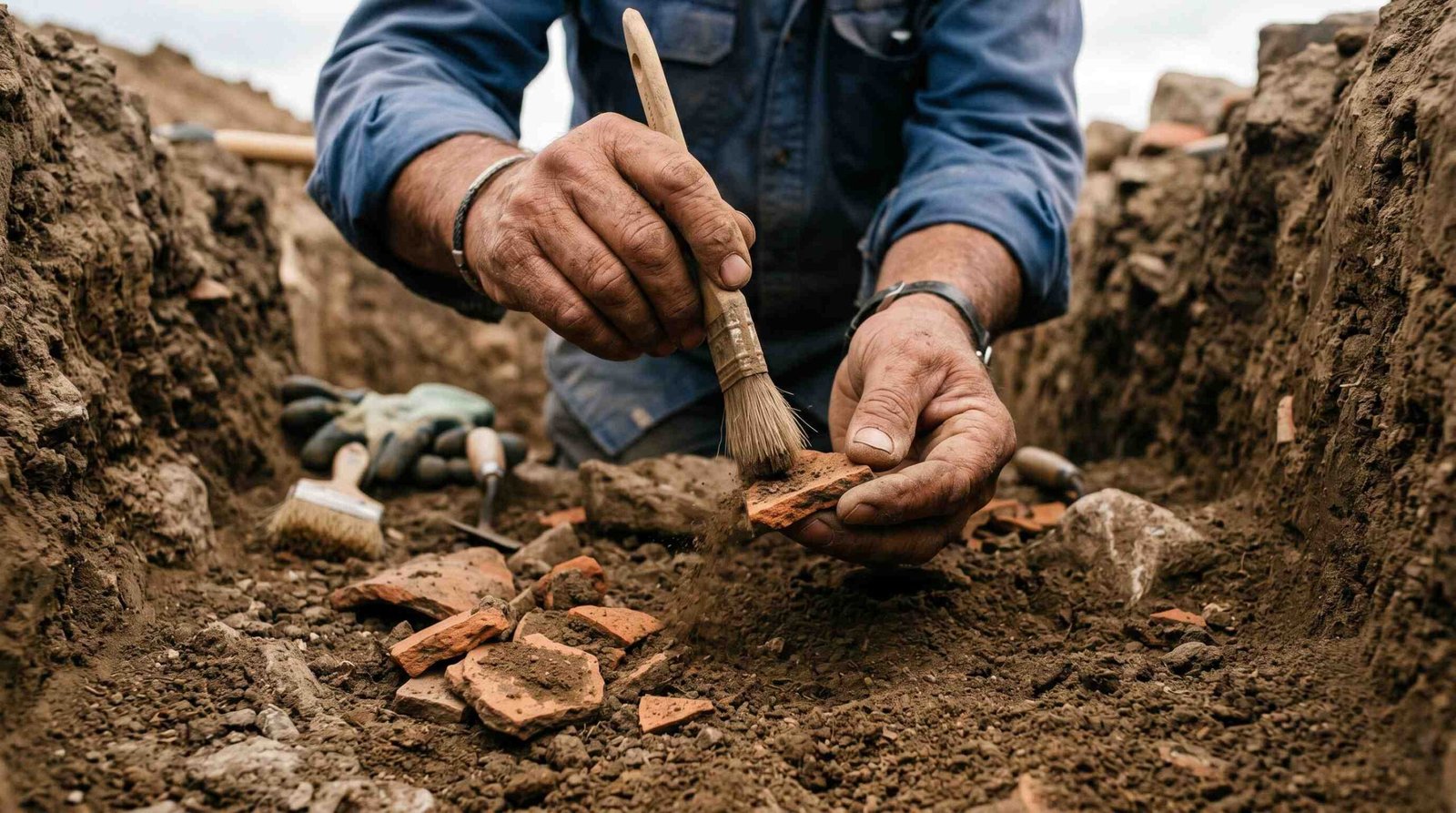
Archaeologists exploit this by building master sequences called ceramic typologies. They excavate sites where stratigraphic layers stack like pages in a book, each layer holding pottery of its own moment, sealed beneath younger debris and over older deposits. By recording exactly which styles appear together in which layer across many sites, specialists construct a regional chronology. A particular bowl form with a flaring rim and reddish slip might be tagged as “Phase III, 1200 to 1100 BCE.” Once that style is calibrated against external dates, often from radiocarbon analysis of charcoal in the same layer, the pottery itself becomes a portable clock. Find that bowl form anywhere in the region, and you have an immediate date range without needing fresh radiocarbon work. Researchers at The Oriental Institute have built some of the foundational Near Eastern typologies over a century of fieldwork, and excavators across Mesopotamia still rely on those sequences today.
The bell-bottom analogy is the friendliest way to explain the principle. If you find a photograph buried in a shoebox and someone in it is wearing wide-flared denim with a paisley shirt, you can guess the picture comes from around 1973 without seeing any other clue. Pottery typology works the same way but with much sharper resolution. A trained ceramicist can often date a Roman provincial sherd to within 25 years on style alone. That precision exists because pottery production scaled up early, fashion changed quickly, and broken sherds are essentially immortal in soil. Wood rots, iron rusts, cloth disintegrates, but a fragment of fired clay survives floods, fires, and burial for thousands of years almost unchanged.
The other reason this method works is that pottery breaks. A lot. A typical household used and shattered dozens of vessels in a single generation, so excavators recover millions of sherds where they might recover only a handful of metal tools. Volume gives statistical confidence. When ninety percent of the sherds in a layer match a known type and the remaining ten percent are slightly later styles drifting in from the layer above, the dating is robust.
Famous Discoveries Made Possible by Pottery Evidence
Heinrich Schliemann’s excavation of Troy in the 1870s would have been chronological chaos without ceramics. The mound at Hisarlik turned out to hold nine major settlement layers stacked on top of one another, each city built on the rubble of the last. Schliemann himself confused several of them, but later excavators including Wilhelm Dorpfeld and Carl Blegen used pottery typology to sort the layers into a coherent sequence stretching from roughly 3000 BCE to Roman times. Without those pottery phases, Troy would still be a knot of buried walls with no agreed timeline.
Tutankhamun’s tomb, opened by Howard Carter in 1922, contained hundreds of ceramic vessels alongside the famous gold. Wine jars labeled with vintage years and royal estates allowed Egyptologists to refine the chronology of the late 18th Dynasty. The pottery filled in administrative detail that the precious metals could not. Across the Atlantic, the Maya site of Tikal yields a continuous ceramic sequence from roughly 800 BCE to 900 CE, and that sequence anchors the dating of every monument and inscription on the site. Pull pottery out of any of these excavations and the timeline collapses.
Pottery, Religion, and Social Power
What Burial Pottery Reveals About Ancient Beliefs
Tombs are pottery catalogs. From the Yangshao culture of Neolithic China to Athenian cemeteries to Mississippian mound burials, communities placed ceramic vessels with their dead. Some held food and drink for the journey, some held cosmetics or oils, and some appear to have been made specifically for the grave and never used in life. The patterns tell us what those people believed about what came after.
Greek funerary lekythoi, slim oil bottles painted with scenes of mourning, were lowered into graves filled with perfumed offerings. Mochica grave pots in Peru depict everything from agricultural scenes to medical procedures, leaving a visual encyclopedia of daily life that no written source preserves. Pre-dynastic Egyptian burials at Naqada include carefully arranged pottery sets that suggest a structured ritual long before hieroglyphic records exist. Each tradition uses clay to negotiate the boundary between living and dead.
Fine Pottery as a Status Symbol, Then and Now
Owning the right pot has always signaled rank. Roman elites collected red-gloss terra sigillata from specific workshops in Gaul and Italy, brand-conscious in a way that feels familiar. Song dynasty emperors patronized specific kilns to produce wares for the imperial household, and those Ru and Guan pieces now sell at auction for tens of millions of dollars. Mayan kings commissioned painted cylindrical vases inscribed with their names, then handed them out as diplomatic gifts to subordinate rulers. The vase was both art and a contract.
The same logic continues. A studio pot by Lucie Rie or Shoji Hamada carries the same kind of social weight today that a black-figure krater carried in 5th century BCE Athens. Pottery has always been a way to display taste, wealth, and allegiance to a particular cultural lineage.
A World of Pottery: Six Traditions Compared
| Culture or Region | Time Period | Distinctive Features | Key Contribution to History |
|---|---|---|---|
| Jomon, Japan | circa 14,000 to 300 BCE | Cord-marked surfaces, coil-built forms, flame-rim sculptural tops | Earliest known pottery on Earth, dated to roughly 16,000 years before present |
| Ancient Egyptian | circa 5500 BCE to 30 BCE | Red and black ware, faience glazing, painted pre-dynastic vessels | Linked pottery production to state administration and grain redistribution |
| Ancient Greek | circa 1000 to 100 BCE | Black-figure and red-figure painting, narrative scenes, amphora and krater forms | Recorded mythology and daily life as a visual canon that survives today |
| Roman Terra Sigillata | circa 50 BCE to 300 CE | Bright red gloss surface, mold-made relief decoration, workshop stamps | Industrial-scale production with branded quality control across an empire |
| Pre-Columbian Maya | circa 1000 BCE to 1500 CE | Polychrome painting, hieroglyphic inscriptions, ritual cylindrical vases | Preserved political history and dynastic records in painted form |
| Chinese Porcelain | circa 200 CE to present | Kaolin clay, high-fire glazes, cobalt blue underglaze, translucent body | Defined global luxury trade for more than a millennium across the Silk Road and beyond |
Why Pottery Traditions Survived to Today
Hand-Building Techniques That Predate Written Language
The basic methods a potter uses in a studio this week, pinching, coiling, slab construction, are older than any alphabet. A coil-built jar from Neolithic Anatolia and a coil-built jar from a contemporary studio in New Mexico share the same essential physics: rolling clay into ropes, stacking them into a wall, smoothing the joins, and letting the form rise with the strength of the clay itself. Our hand-building pottery guide walks through these same techniques in detail, and the steps would be recognizable to a potter from any millennium. The pottery wheel arrived later, around 4000 BCE in Mesopotamia, and even the wheel is now a 6,000-year-old technology that still operates on the same principle of centripetal force shaping wet clay.
That continuity is part of why pottery matters. Most ancient technologies, knapping flint, smelting bronze, weaving linen on a warp-weighted loom, have either disappeared or moved into hobbyist niches. Pottery has not. People still build domestic ware by hand in villages across West Africa, the Andes, and Southeast Asia using methods that would be recognizable to a Neolithic visitor. When you sit down at a wheel today, you join a working tradition that has run continuously for thousands of years. The Smithsonian’s coverage of Jomon ceramics in Smithsonian Magazine describes how scholars have traced this unbroken line of practice, and how modern potters in Japan still reference Jomon forms in studio work today. If you are curious about turning hand techniques into wheel work next, our guide to pottery wheels covers the leap.
Where to See Major Historical Pottery Collections
The British Museum in London holds extraordinary Greek vase collections including the Portland Vase and a comprehensive run of Athenian black-figure and red-figure work. The Metropolitan Museum of Art in New York houses one of the best Pre-Columbian ceramic collections outside of Latin America, plus stunning Tang and Song Chinese ceramics. The National Museum of China in Beijing displays the full sweep of Chinese pottery from Neolithic painted wares through imperial porcelain. The Ashmolean Museum in Oxford has been collecting Mediterranean pottery since the 17th century and remains one of the most reference-rich research collections in the world. Spend a few hours in any of these spaces and the patterns described above stop being abstract.
Frequently Asked Questions About Pottery in History
What is the oldest known pottery in the world?
The oldest securely dated pottery comes from Jomon-period sites in Japan, with fragments recovered from Odai Yamamoto and other locations dated to roughly 16,000 years before present. These cord-marked vessels predate the development of agriculture in Japan, which means hunter-gatherer communities were producing fired clay long before farming reached the islands. Slightly older claims have come from Xianrendong Cave in southern China at around 20,000 years before present, though those dates remain debated among specialists.
Where was pottery independently invented?
Pottery emerged independently in several regions of the world over thousands of years, which makes it one of the clearest examples of parallel invention in human history. East Asia produced the earliest examples, with Japan and southern China both showing very early dates. North Africa developed pottery by roughly 10,000 BCE in the Sahara during a wetter climate phase. The Near East followed shortly after. Sub-Saharan Africa, the Americas, and Sub-Arctic Eurasia each developed their own ceramic traditions on independent timelines.
What is the difference between pottery and ceramics?
Pottery is a subset of ceramics. Ceramics is the broad category covering any object made from inorganic, non-metallic materials hardened by heat, which includes pottery but also porcelain, tiles, bricks, sanitaryware, and modern technical ceramics used in aerospace and electronics. Pottery specifically refers to functional and decorative vessels, generally fired at lower temperatures than industrial ceramics, and typically made from clay rather than engineered material blends. In casual conversation people use the terms interchangeably, and most studio potters describe their work as both.
How long has pottery been made?
Pottery production stretches back at least 16,000 years based on confirmed Jomon evidence, and possibly closer to 20,000 years if the contested Chinese dates hold up. By comparison, agriculture is roughly 12,000 years old, writing is roughly 5,500 years old, and metallurgy spread widely only in the last 6,000 years. Pottery is older than nearly every cultural marker we associate with civilization, which is part of why it shows up in so many origin stories around the world.
What is the most archaeologically significant pottery find?
Cases for the most significant find vary by specialty, but the Jomon corpus often takes the honor for sheer chronological importance, since it reset our timeline for human technological development. The Mycenaean Linear B tablets, fired clay rather than thrown vessels, rank close behind for their decoding of Bronze Age Greek administration. The Mochica portrait vessels of Peru rewrote scholarly understanding of Pre-Columbian artistic sophistication. Each of these finds changed a major academic field on its own.
Why does pottery survive so well in the archaeological record?
Fired clay is chemically stable. Once a vessel passes through a kiln at roughly 600 degrees Celsius or hotter, the clay minerals transform into a hard, water-resistant matrix that resists almost everything soil can throw at it. Pottery does not rust, rot, or burn in any practical sense. It can break into small pieces, but those pieces themselves remain intact for tens of thousands of years. Combine that physical durability with the fact that every household broke and discarded vessels constantly, and excavators end up with enormous sherd assemblages from almost every occupied site, which is exactly why pottery ended up as archaeology’s dating backbone.