
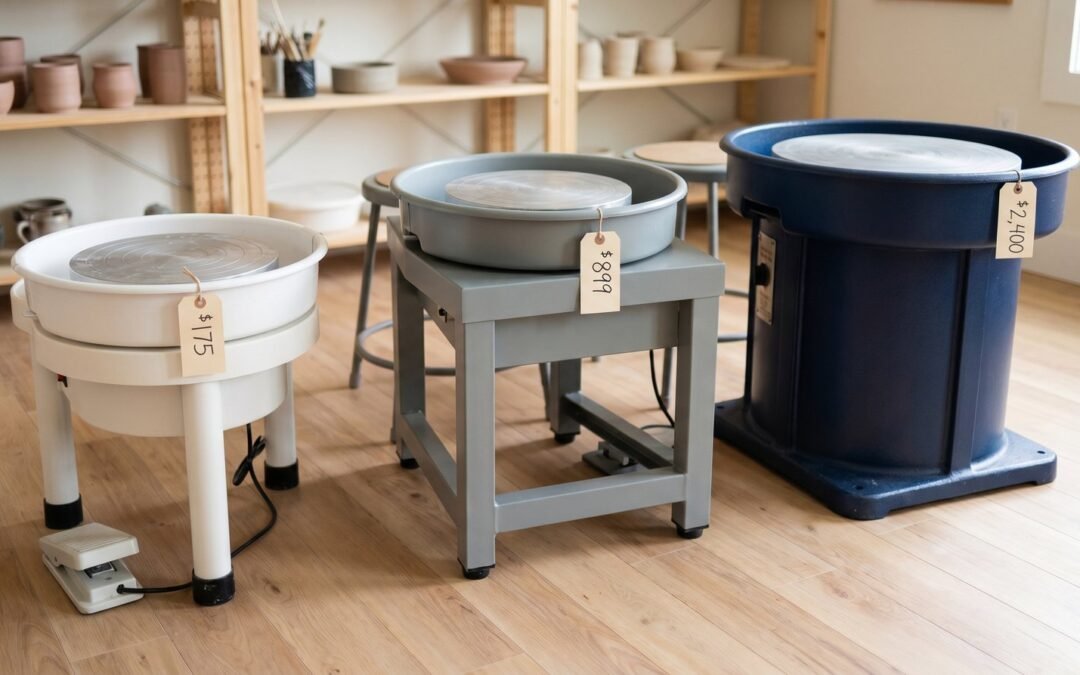
Whether you’re considering your first pottery wheel or upgrading from a hand-me-down, “how much does a pottery wheel cost” is the question that decides whether you commit to the craft. The short answer: $175 to $2,500+ for the wheel alone, with most committed beginners landing in the $600–$1,200 range. The longer answer, which tier actually fits your goals, what hidden costs come with the wheel, when it makes more sense to rent studio time, and which specific models hold up, is what the rest of this guide is for.
Pottery Wheel Cost: The Quick Answer
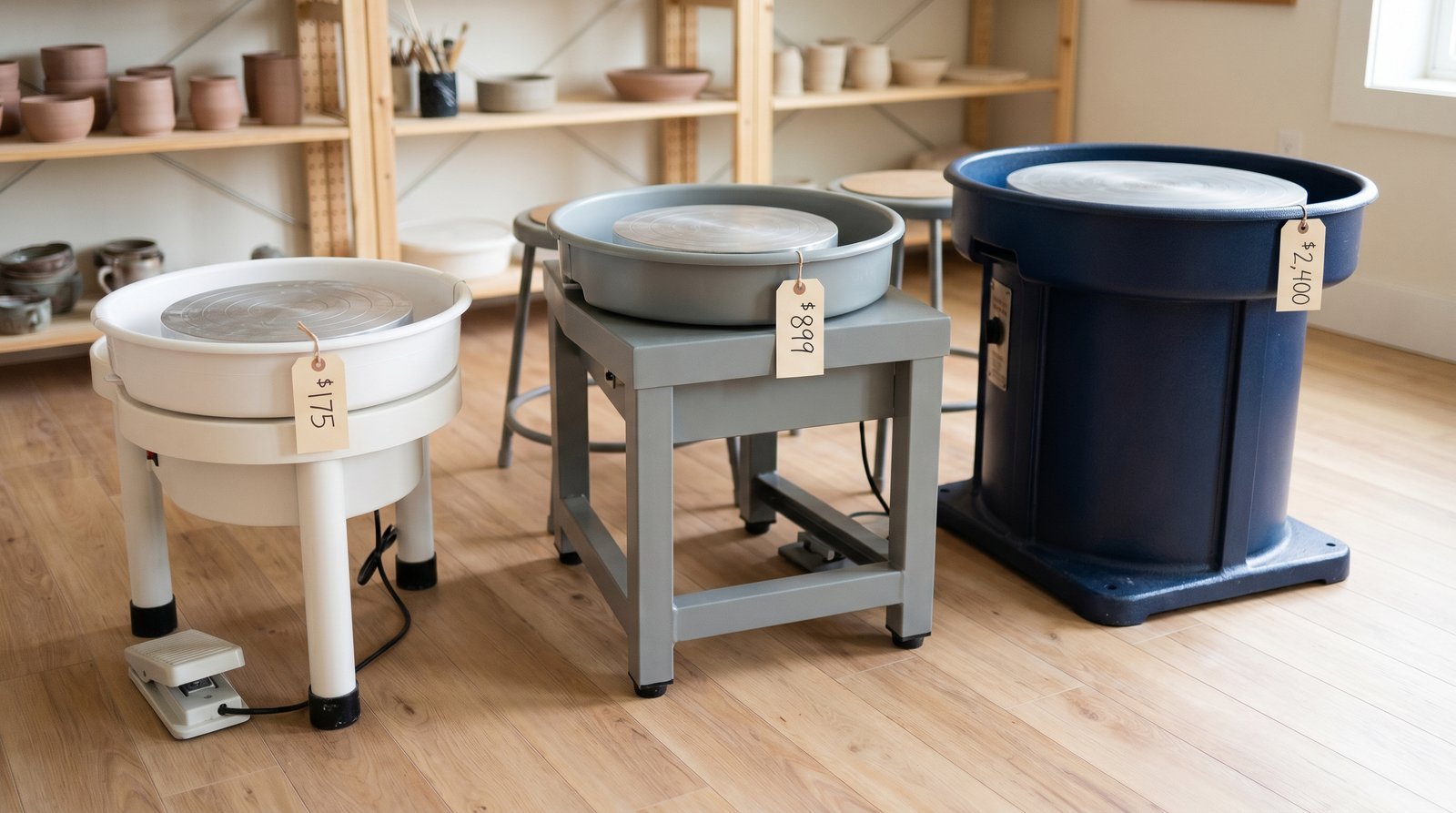
Pottery wheels in 2026 fall into four price tiers. Here’s the at-a-glance breakdown most buyers are after:
- Budget, $175 to $450. Entry-level electric wheels for hobbyists testing the waters. Small wheel heads, lower torque, plastic bodies. Examples: VEVOR 14″ (around $175), Mophorn (around $280), US Art Supply (around $350).
- Mid-Range, $450 to $1,200. The sweet spot for committed beginners and intermediate potters. Solid build, real torque, reliable parts. Examples: Speedball Artista ($599), BTH B2 Sirius ($1,058), Speedball Clay Boss ($1,120).
- Premium, $1,200 to $2,500. Serious potters and small home studios. Heavy-duty motors, cast iron bases, decades of durability. Examples: BTH D3 Andromeda ($1,680), Brent B ($1,800–$2,700), Skutt Prodigy ($2,100).
- Studio-Grade, $2,500 and up. Production-volume work and teaching studios. Examples: Brent C ($2,500+), Brent CXC ($3,000+), Soldner P-100 ($3,500+).
Most committed home potters end up happiest in the $600–$1,200 mid-range tier. That’s where you get a wheel that won’t bottleneck your progress without paying for capacity you’ll likely never use.
What Actually Drives the Price of a Pottery Wheel
You can spend $175 or $3,000 on a pottery wheel and end up with two machines that look superficially similar. Here’s what you’re actually paying for as the price climbs.
Motor power and torque
The motor is the heart of the wheel. Budget models use small (often DC) motors rated at 1/4 horsepower or less, fine for 5 pounds of clay, but they’ll bog down or skip when you center a heavier brick. Mid-range and premium wheels use 1/2 to 1 HP industrial motors that don’t flinch under 25–30 lb loads. If you plan to throw larger forms (vases, bowls over 12 inches), motor torque is the single biggest reason to skip the budget tier.
Wheel head size and weight capacity
Capacity numbers are everywhere on the spec sheets. Budget wheels advertise around 25 lb of clay. Mid-range wheels jump to 100 lb. Premium wheels push 150 to 225 lb. Thomas Stuart’s professional 1 HP wheel rates over 400 lb. So why does a hobbyist throwing 5 lb mugs need a 100 lb wheel?
The number is not about how much clay you put on the wheel head. It is centering capacity under load. Centering even a modest piece requires significant downward force from the potter on top of the clay weight, plus the dynamic load of pulling walls up at speed. A motor rated for 25 lb of static clay can stall when a beginner leans into centering, which is exactly the moment you need consistent torque. As The Pottery People put it, “you don’t want to be pushing it to its limit every time.”
The truth: most home potters throw 5 to 25 lb pieces, but the wheel needs motor headroom well above that. Manufacturers publish their ratings as centering capacity precisely because that is the relevant metric under real throwing loads. Higher horsepower means more torque to hold RPM under load, which is what stops your wheel from bogging down when you commit weight to centering.
Practical rule: pick a wheel rated for 3 to 5x the heaviest piece you plan to throw.
Wheel head size matters separately. Larger heads (14 to 16 inch) give you room to work with bats and offset forms. Budget wheels often have smaller heads (11 to 14 inch) that limit bat sizes and bigger pieces.
Build materials
The cheap tells are everywhere on budget wheels: pressed plastic bodies, stamped sheet-metal frames, plastic splash pans that crack the first time you bump them with a knee. Premium wheels use cast iron or welded steel bases, machined aluminum wheel heads, and heavy-duty splash pans. Build matters because pottery is a wet, vibration-heavy craft, plastic and pressed metal don’t age well.
Reversibility and speed control
Reversible wheels (those that spin clockwise and counterclockwise) are standard on mid-range and up. Left-handed potters specifically need this. Speed control matters more universally: cheap wheels use a basic rheostat that gives jumpy, imprecise speed changes. Better wheels use electronic speed controllers that hold steady RPM under varying load. Once you’ve thrown on a wheel with rock-steady speed, you can’t go back.
Brand reputation and warranty
Brent (made by Amaco), Shimpo, Speedball, Skutt, and Bailey have all been building pottery wheels for decades. Their warranties, often 5–10 years on motors and lifetime on frames, reflect that. Budget brands like VEVOR, Mophorn, and US Art Supply offer 1–2 year warranties at best, and replacement parts are often unavailable past warranty.
For a deeper look at why specifically the price climbs steeply at the higher tiers, see our breakdown of why pottery wheels are so expensive.
Electric vs Kick Wheels: Which Costs More?
Most modern pottery wheels are electric. Kick wheels, manually powered by foot pumping, are a small but persistent niche, especially for purists and traditional studios.
Here’s the counter-intuitive truth: new kick wheels are not cheaper than electric. A new commercial-grade kick wheel from Brent or Bailey runs $1,200–$1,800, on par with a mid-range electric. The kick wheel’s appeal is independence from electricity (good for off-grid studios), the meditative rhythm of foot-powered throwing, and lower long-term maintenance (no motor to burn out).
Electric wins on speed, consistency, ease for beginners, and the ability to throw larger forms. For 95% of potters reading this, electric is the right choice. Kick wheels are a craft preference, not a budget play.
The Used Pottery Wheel Market: Where the Deals Actually Live
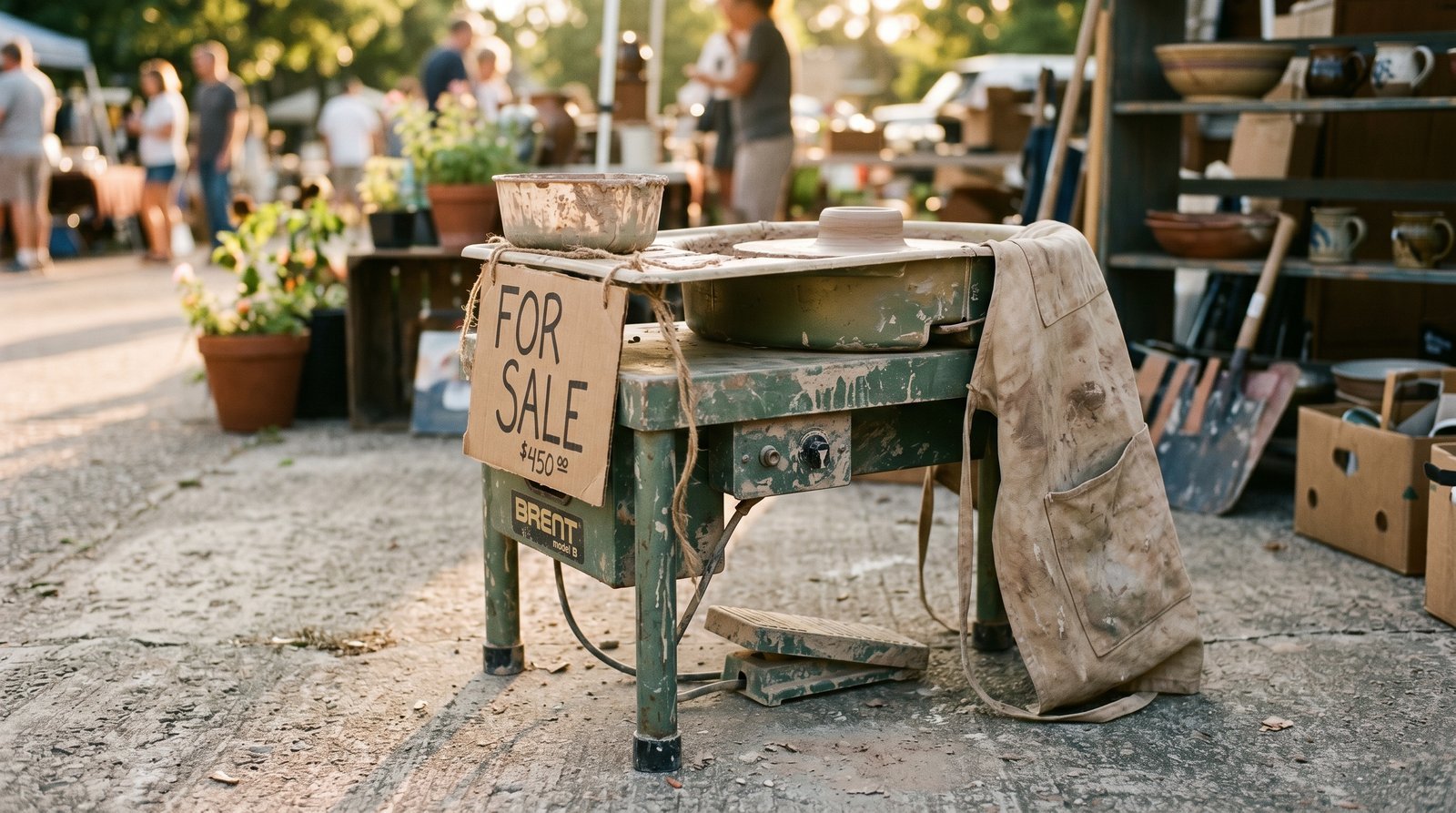
If your budget feels tight, the used market is where to look before compromising on a budget-tier new wheel. A 10-year-old Brent B in working condition typically sells for $800–$1,200, half retail and still better-built than anything new under $1,500.
Where to look
- Facebook Marketplace, biggest selection and lowest prices, but local pickup only and inspection is on you.
- r/Pottery on Reddit, community-vetted listings, occasional brand-specific deals.
- Local ceramic supply stores, many take wheels on consignment.
- Pottery guild bulletin boards, retiring potters list here first, often below market.
- Estate sales and craft-fair end-of-season clearances, sleeper deals if you can be patient.
What to inspect before buying
- Power it on under load. Push down on the wheel head with one hand while it spins at medium speed. Any lag, smell, or weird noise is a hard pass.
- Check the wheel head for wobble. Spin it slowly and watch the edge, anything more than a millimeter of vertical play means worn bearings.
- Inspect the splash pan and frame for clay buildup and corrosion. Surface rust is OK; pitted metal is not.
- Ask for the original purchase year and any motor service history. A 20-year-old wheel with no service is risky regardless of brand.
Brand matters most on the used market. Brent, Shimpo, Speedball, and Bailey all have parts available decades after purchase. Used budget-brand wheels (VEVOR, Mophorn, and similar) are usually unfixable, buy used premium or buy new budget, but not used budget.
Total Cost of Ownership: What You’ll Actually Spend in Year One
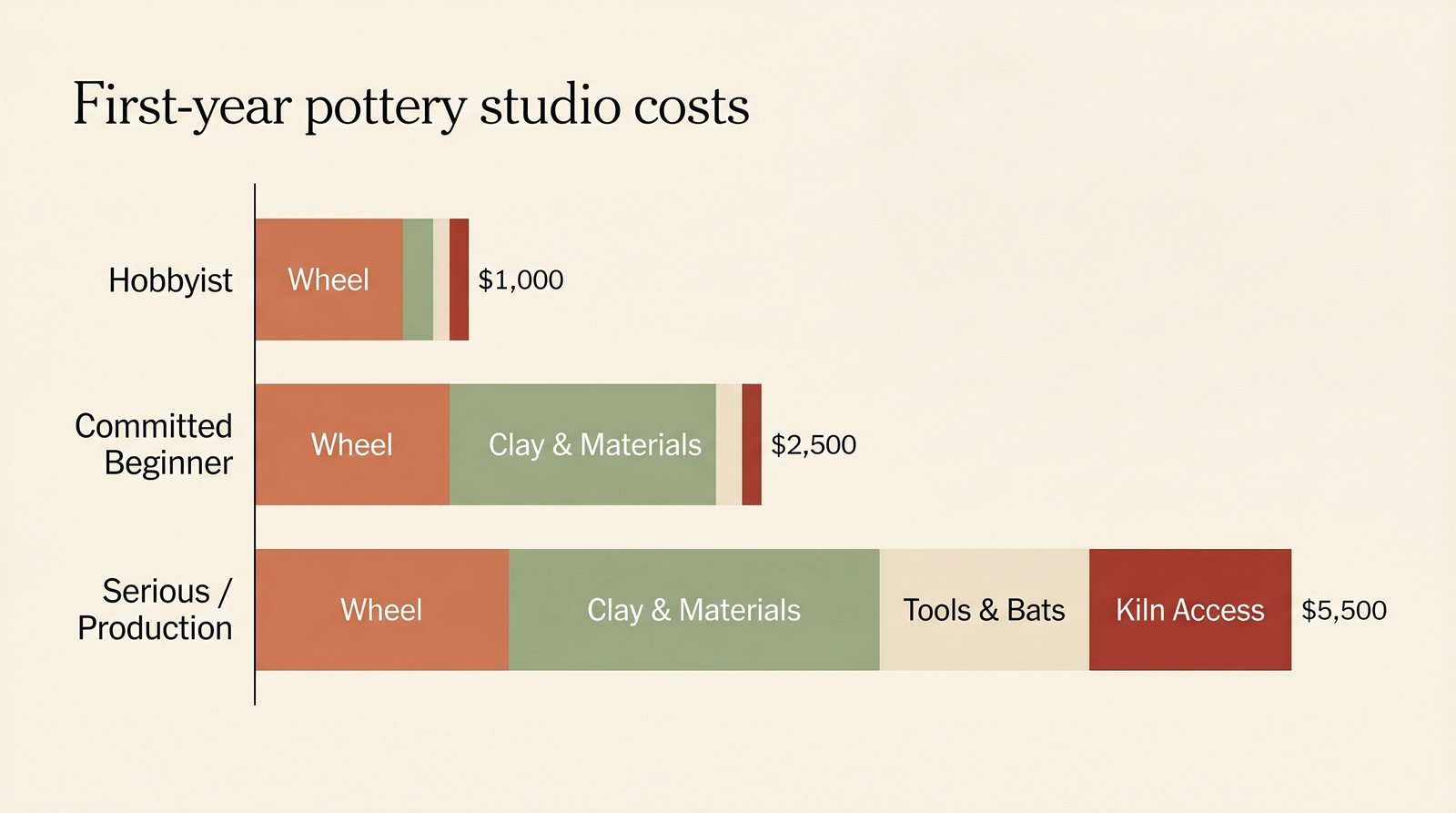
The wheel is roughly half of what it costs to set up a working pottery studio. Here’s what most beginners forget to budget for.
Clay and consumables
- Clay: $30–$50 per 25 lb box. Most beginners go through 50–100 lb in their first three months.
- Bats (wood or plastic plates that mount on the wheel head): $15–$30 each. You’ll want 8–12 of them.
- Throwing tools (ribs, needles, sponges, trimming tools): $50–$150 for a beginner kit.
- Glazes: $30–$100 per gallon. Most setups need 3–5 to start. For more on what to pick, see our guide to different types of pottery clay and their uses.
The kiln question
This is the budget gotcha most pottery wheel buyers miss. A wheel is useless without a way to fire your pieces. Options:
- Buy a small electric kiln: $800 to $2,500 for a hobby-scale model (Skutt, Olympic, Paragon). Plus you’ll need 240V wiring or a propane setup.
- Rent kiln time at a local studio: $50–$150 per firing session, or $30–$80 per month for unlimited access.
- Bisque-fire only and sell unglazed: limits what you can make, but cuts firing complexity.
For your first year, rent kiln time at a local studio. Even committed potters often find that the kiln math doesn’t work until they’re firing four-plus batches a month. For more on the firing side, see our complete guide to firing pottery.
First-year budget by tier
| Setup Tier | Wheel | Materials | Kiln Access | Year One Total |
|---|---|---|---|---|
| Hobbyist (testing the waters) | $175–$450 | $150–$300 | Studio rental ~$400 | $725–$1,150 |
| Committed Beginner | $600–$1,200 | $300–$500 | Studio rental ~$600 OR own kiln ~$1,200 | $1,500–$2,900 |
| Serious / Production | $1,500–$2,500 | $500–$1,000 | Own kiln $2,000–$3,000 | $4,000–$6,500 |
Pottery Wheel vs Studio Membership: When Owning Wins
A typical urban pottery studio charges $80–$200 per month for membership, often including kiln access and clay discounts. So when does buying your own wheel actually beat renting?
The simple math: a $1,000 wheel breaks even against a $150/month studio membership at month 7, assuming you’d otherwise be there every month. If you’re going to the studio twice a week or more, owning pays back inside a year.
The honest reasons to own anyway, even when the math doesn’t quite work:
- You want to throw on Sunday mornings without driving to a studio.
- You’re working on a specific style or large forms that need extended uninterrupted sessions.
- You’re in a rural area without studio access.
- You’re approaching this as a long-term craft, not a casual hobby.
The hybrid approach, own a mid-range wheel for daily practice, keep a studio membership for kiln access and community, works well for most committed potters.
How to Decide Which Wheel Is Right for You
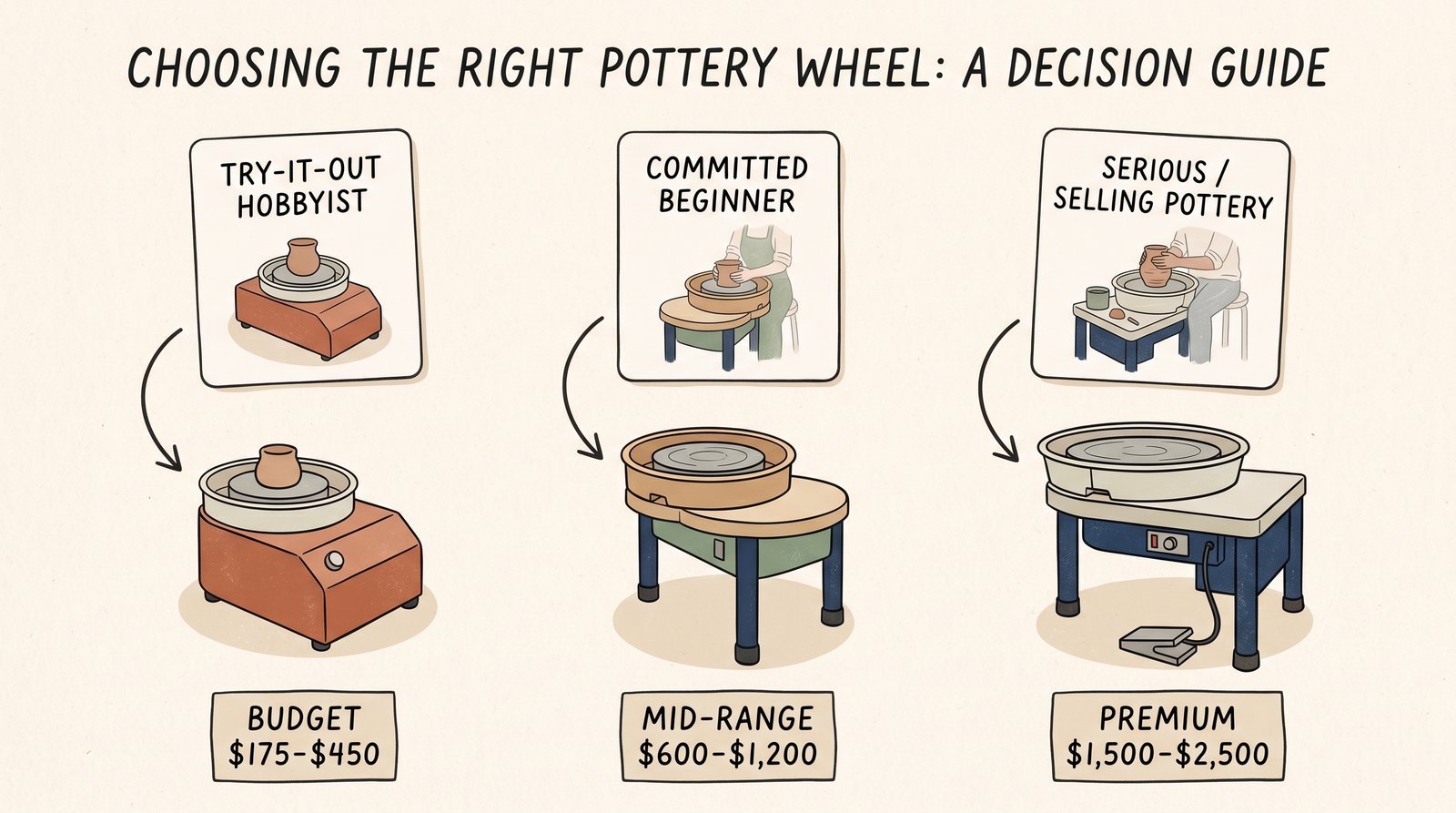
Skip the spec sheets and answer these four questions first:
- How much clay will you throw at once? Under 5 lb, any tier works. 5–15 lb, mid-range minimum. Over 15 lb, premium tier.
- How often will you throw? Once a week or less, budget or used. 2–3 times a week, mid-range. Daily, premium.
- Is this a hobby or are you trying to sell pottery? Hobby, don’t overspend. Selling, invest in reliability and capacity.
- Do you have kiln access? If not, factor that into the budget before picking a wheel tier.
Recommendations by persona
- Try-it-out hobbyist: Used Speedball Artista or a new VEVOR 14″ ($175–$400). If you stick with it, upgrade in year two.
- Committed beginner-intermediate: Speedball Clay Boss or BTH B2 Sirius ($1,000–$1,200). Won’t bottleneck you for 5+ years.
- Serious or selling pottery: Brent B or Skutt Prodigy ($1,800–$2,500). The “buy it once” tier.
- Studio or teaching environment: Brent C or CXC ($2,500–$3,500). Built for daily use under varied users.
Top Pottery Wheel Picks at Each Price Point (2026)
Best Budget Pick: VEVOR 14″ Pottery Wheel, around $175
The VEVOR has become the de facto budget pick for a reason: it’s a real electric pottery wheel for the price of a nice dinner out. 350W motor, 14″ wheel head, adjustable speed, foot pedal, reversible. The plastic body shows its price point, and the motor will bog down on anything over 8–10 lb of clay. Pros: cheap, works, ships fast. Cons: short lifespan under daily use, parts replacement is hard. Ideal for: first-year hobbyists who aren’t sure yet.
Best Mid-Range Pick: Speedball Artista, around $599
The most-bought wheel in beginner pottery classes for a reason. Speedball’s table-top design is portable, the 1/3 HP motor handles up to 25 lb, and the 11″ wheel head is workable for most home potters. Quiet electronic speed control. Pros: portable, reliable, parts available everywhere. Cons: 11″ head is small for larger forms. Ideal for: apartment potters and anyone serious about the craft but not throwing huge pieces.
Best Premium Pick: Brent Model B, $1,800–$2,700
The American workhorse. Brent B has been the go-to studio wheel for 30+ years. 1/2 HP industrial motor, 14″ head, 100 lb capacity, lifetime frame warranty. You’ll find these in every art school in the country. Pros: built for decades of daily use, parts and service forever, holds value on the used market. Cons: heavy (90+ lb), not portable. Ideal for: serious home potters, small studios, anyone planning to sell pottery.
For other beginner-friendly setups, see our guide to the best pottery wheel kit for beginners.
Frequently Asked Questions
Are pottery wheels worth the investment?
For anyone planning to make pottery their primary craft or income source, yes. A quality wheel lasts 20+ years and dramatically improves output and consistency over hand-building. For casual hobbyists who throw less than monthly, renting studio time is usually the better economic choice.
How long do pottery wheels last?
A premium wheel (Brent, Shimpo, Speedball studio models) will run for 30+ years with basic motor service every decade. Mid-range wheels last 10–15 years of regular use. Budget wheels typically last 3–7 years before motor or component failure.
Can I make money selling pottery to recoup the wheel cost?
Yes, but slowly. Mug sets sell for $40–$80 retail, bowls $30–$60, larger vessels $80–$300+. A $1,500 wheel pays for itself with roughly 30–40 mug sets at craft-fair prices, achievable in a year of focused production. Etsy and Instagram are the most common sales channels for new potters.
What’s the cheapest way to start with pottery?
Take a beginner class at a local studio first, usually $150–$300 for a 6–8 week course. You’ll get wheel time, clay, and firing all included, and you’ll know within a month whether you want to commit to the craft. Then buy a wheel if (and only if) the answer is yes.
This guide reflects current 2026 retail pricing across major US pottery wheel suppliers including Bailey Pottery, The Ceramic Shop, Sheffield Pottery, Clay-King, and Soul Ceramics. Prices change frequently, especially on the used market, verify current pricing with the seller before purchase.