
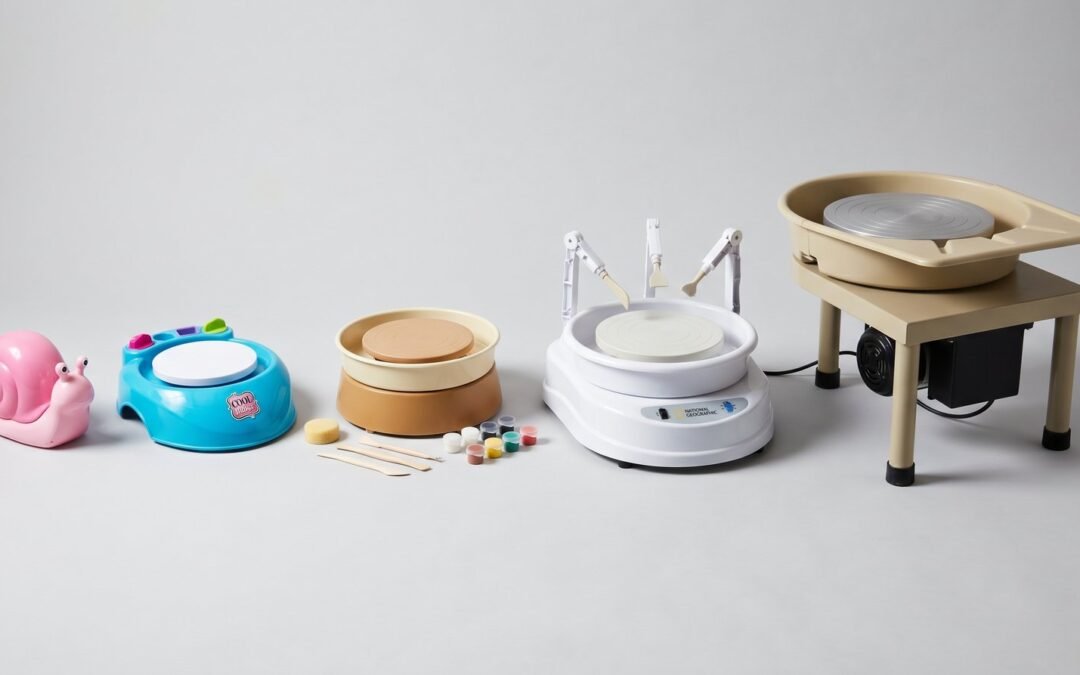
Quick answer: The best pottery wheels for kids in 2026 are the Cool Maker Pottery Studio (ages 8+, around $25) for first-timers on a budget, the Faber-Castell Do Art Pottery Studio (ages 8+, around $48) for steady use, and the National Geographic Pottery Wheel for Kids (ages 8+, around $70) for the best-included kit. For serious older kids ready for a real wheel, the Speedball Artista (ages 12+ with supervision, around $749) is the entry point. Skip the unbranded Amazon mini wheels and any battery-only kits, both have safety histories worth knowing about.
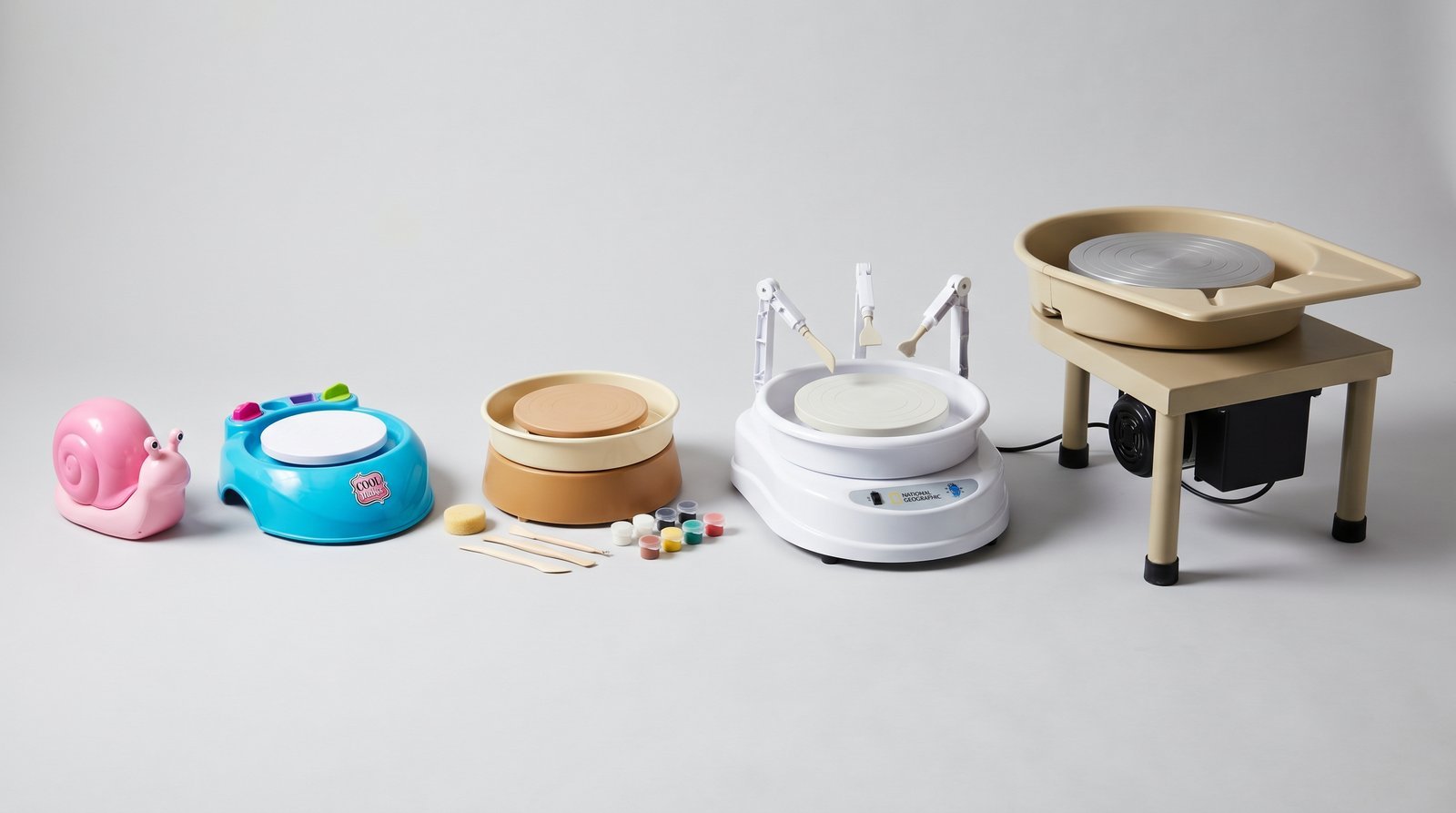
Best pottery wheels for kids 2026 at a glance
| Wheel | Age | Price | Power | Clay type | Best for |
|---|---|---|---|---|---|
| Cool Maker Pottery Studio | 8+ | ~$25 | Battery | Air-dry | First-time, budget |
| Faber-Castell Do Art Pottery Studio | 8+ | ~$48 | USB or batteries | Air-dry (3 lb included) | Established art brand, full kit |
| National Geographic Pottery Wheel | 8+ | ~$70 | Plug-in 2-speed motor | Air-dry (2 lb included) | Best torque, integrated arm tools |
| Aujazyble Snail Pottery Wheel | 6-12 | ~$30 | Battery | Air-dry (kit included) | Younger kids, novelty design |
| Speedball Artista (real wheel) | 12+ with supervision | ~$749 | 1/3 HP electric, 0-220 RPM | Real clay, needs kiln | Serious teens, lifetime tool |
What age can a child start using a pottery wheel?
Most commercial kids pottery wheels carry an official age rating of 8 years and up. That includes the three biggest brands on the market: Faber-Castell, National Geographic (made under license by Blue Marble), and Cool Maker by Spin Master. Each one centers on the same idea, a small electric or battery-driven wheel head, air-dry clay, sculpting tools, and paint, all in a single box.
Younger kids (ages 5 to 7) can absolutely work with clay, but a spinning wheel is usually overkill for them. Their hand strength, fine motor control, and attention span are better matched to pinch pots, coil building, and slab work with air-dry clay. If a 5- or 6-year-old wants to spin something, look for a hand-cranked banding wheel kit rather than a motorized toy. The risk profile is lower, the cost is lower, and the actual creative output is often better.
For kids 10 and older with steady hands and a year or two of pinch-pot experience, a more capable toy wheel like the National Geographic kit makes sense. For kids 12 and up who have been throwing for a season or more, the conversation shifts to whether they are ready for a real adult wheel, more on that below.

Best budget pick: Cool Maker Pottery Studio (Ages 8+)
The Cool Maker Pottery Studio, made by Spin Master under their Cool Maker craft brand, is the cheapest credible kids pottery wheel we tested. Walmart lists it at around $25, with the bundled clay, sculpting tools, and paint roughly matching the more expensive kits. The wheel itself is battery-powered, with one constant speed and a small wheel head about 4 inches across. It is genuinely a toy, not a tool, and that is fine for the price.
What you give up at this price: there is no plug-in power option, the motor stalls easily under firm hand pressure, and the included clay supply is on the small side. Kids who use this heavily will burn through batteries and want more clay after the first weekend. We suggest budgeting another $10 to $15 for an extra pound of air-dry clay if your child takes to it.
Best mid-range pick: Faber-Castell Do Art Pottery Studio (Ages 8+)
The Faber-Castell Pottery Studio kit sits in the sweet spot. At a list price of $64.99 and a typical street price around $47, it pairs a fully-assembled tabletop wheel with 3 pounds of natural air-dry clay, a 6-piece sculpting tool set, acrylic paints, paintbrushes, an instruction booklet, and the small extras (sponge, trimming cord) that make the difference between a frustrating first session and a successful one.
Two practical features set this kit apart. First, the wheel runs from either a USB cable or 3 C batteries, so kids can throw at a table near an outlet or take the wheel outside without worrying about cords. Second, there is a two-speed switch when running on batteries, which conserves power and gives slightly better control during opening and shaping. The wheel itself is about 11 inches wide and 3 inches tall, light enough for a child to carry. Faber-Castell has been making art supplies since 1761, and the kit reflects that: nothing flashy, just well-designed kid-grade gear.
Best feature-rich pick: National Geographic Pottery Wheel (Ages 8+)
The National Geographic Pottery Wheel for Kids is the most expensive of the three big-brand options at $69.99, and the most kit-stuffed. Made by Blue Marble (JMW Sales) under license from National Geographic, it includes 2 pounds of air-dry clay, 3 sculpting tools, 6 paint colors with palette and brush, a child-sized apron, video lessons, and an illustrated learning guide that teaches a little of the science and history of pottery.
The key feature is the patented “integrated arm tools” attachment. Three small armatures clip onto the wheel base and assist kids in centering, opening, and shaping their clay with consistent results. For a 7- or 8-year-old whose hand strength is still developing, these training-wheel-style attachments make the difference between a session that ends in tears and one that ends in a recognizable bowl. The motor is plug-in only with two speeds, which provides better torque against downward pressure than battery-powered competitors. The wheel head is small at about 4 inches, but the steady power makes that less of a limitation than it sounds.
One quirk: while officially rated ages 8+, the manufacturer notes the design works for “beginners of all ages.” We have seen reviews from adults using it as a banding wheel for decorative work. It is overpriced for that use, but the durability seems to hold up.
Best for younger kids: Aujazyble Snail Pottery Wheel (Ages 6-12)
The Aujazyble Snail Pottery Wheel, sold mostly on Amazon under a marketing-heavy name, is the rare kids wheel that targets the 6-to-12 age range officially. The snail-shaped housing and bright colors are clearly aimed at a younger child. It is battery-powered with one speed, comes with air-dry clay and basic tools, and runs around $30 on sale.
Be realistic about what this does. The motor is weaker than the National Geographic kit, the wheel head is smaller, and the included clay is the same air-dry variety. What it offers is a friendlier shape for a kindergartner or first-grader who would be intimidated by a more “serious-looking” tool. If you have a 5- or 6-year-old who specifically wants a pottery wheel because their older sibling has one, this is the right call. For a kid who is going to actually use it weekly, the Faber-Castell kit will hold up better.
When kids are ready for a real wheel: Speedball Artista (Ages 12+)
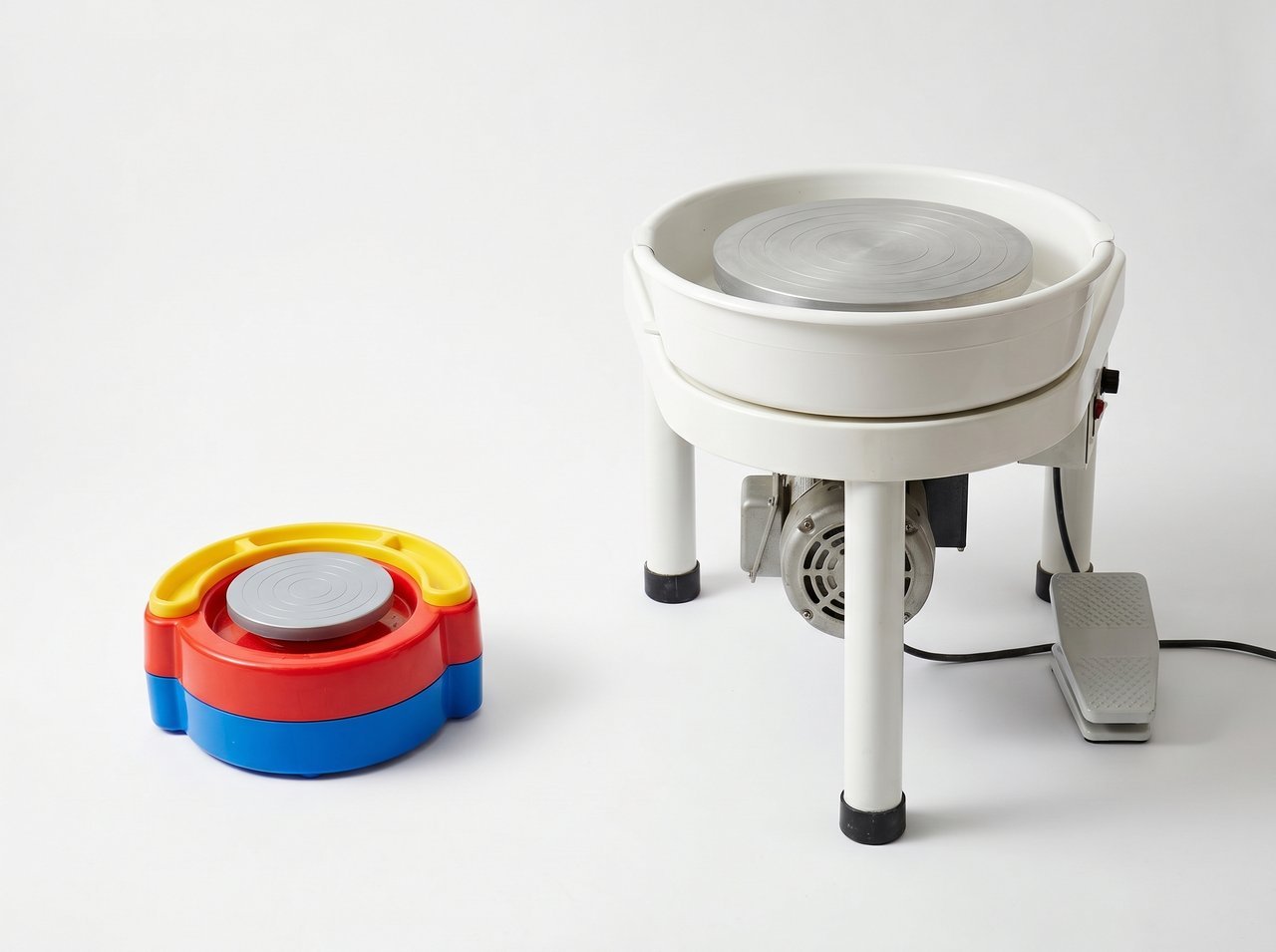
At some point, a kid who keeps throwing outgrows toy wheels entirely. The wheel head is too small. The motor stalls. The air-dry clay produces brittle pieces that crack on the shelf. When that day comes, the entry point to a real adult wheel is usually the Speedball Artista Potter’s Wheel.
The Artista lists at $749 with a 5-year warranty, an 11-inch wheel head, a 1/3 HP motor that delivers 0 to 220 RPM via variable hand control, and a 25-pound centering capacity. That centering capacity number is worth understanding. It does not mean “25 pounds of clay max.” It means the wheel can handle the cumulative downward force a potter exerts when centering a 25-pound ball of clay, which can briefly exceed 75 pounds of applied pressure. Toy wheels stall under 3 to 5 pounds of pressure. That difference is why a serious 12- or 13-year-old will quickly outgrow even the best kids kit.
For pricing context across the rest of the adult wheel market, see our breakdown of how much a pottery wheel actually costs across budget, mid-range, and professional tiers. A real wheel is a real investment, but if a teenager has stuck with pottery for a year or more, it is the right next step. Our broader writeup of the best pottery wheels for beginners compares the Artista against the Brent IE, the Speedball Clay Boss, and the Shimpo VL-Lite, the four wheels most kid graduates end up choosing between.
What to skip: 3 categories of kids pottery wheel to avoid
The Amazon search results for “kids pottery wheel” include several hundred listings. Most are not worth your money, and a few have genuine safety concerns. Three categories to walk past:
1. Generic unbranded “mini pottery wheels” under $25. These ship in plain boxes with names like “Insnug,” “weirtoya,” and rotating SKUs from drop-shipped sellers. The motors are typically rated for 200 to 300 hours of use, the gears are often exposed under thin plastic, and the included clay is sometimes mislabeled as “natural” when it is actually low-grade polymer. Reviews often improve after the seller offers a refund for revised feedback, so star ratings can be misleading.
2. Battery-only kits with no quality certification. The 2018 CPSC recall of Michaels Creatology pottery wheel kits covered 263,000 units after the battery compartment was found to overheat, posing fire and burn hazards. The four mainstream brands above use battery designs with thermal cutoffs, but cheaper unbranded battery kits typically do not. If a wheel is battery-only and has no manufacturer name you recognize, set it down.
3. Cheap LCD touchscreen pottery wheels. A new category emerged around 2023 of “smart” kids pottery wheels with a small LCD screen and touchscreen speed control. The LCD adds nothing functional, the screens crack, the touch interface is laggy under wet fingers, and the price is usually 30 to 50 percent higher than functionally equivalent button-controlled wheels. The Faber-Castell two-speed switch does the same job for less money and lasts longer.
Safety considerations no one talks about
Kids pottery wheel marketing rarely addresses safety beyond “ages 8 and up.” Three points worth knowing:
RPM matters more than torque for kids. Toy wheels run at 30 to 90 RPM on their fastest setting. Real adult wheels run up to 300 RPM. Hair and loose clothing get caught at high speeds, not low ones, which is one reason serious kids studios require hair ties and aprons. The slow speed of toy wheels is a safety feature, not a limitation.
Air-dry clay is not actually fragile during throwing. Parents sometimes worry their child’s air-dry pottery will crumble. The opposite is more common: pieces dry rock-hard and become difficult to remove from the wheel head without cracking. We suggest having your child cut the piece off with a wire tool while still soft, the same technique used on adult wheels. For more on how air-dry clay behaves, see our guide to whether pottery clay can air dry without firing.
Supervise the cleanup, not just the throwing. The CPSC Art and Craft Safety Guide (Publication 5015) flags wet clay residue as a slip hazard and reminds parents that clay particles, once dry and airborne, can irritate young lungs. A damp paper towel wipe-down after each session takes 60 seconds and avoids both problems. Keep clay out of the kitchen and away from food prep surfaces.
Air-dry clay vs. kiln-fired: what kids wheels can actually do
All four big-brand kids wheels are designed for air-dry clay. This is a fundamental difference from adult wheels. Air-dry clay hardens through evaporation, takes 24 to 72 hours to fully cure, and never reaches the chemical transformation of vitrification. The finished piece is decorative only. You cannot eat off it, you cannot put liquid in it for storage, and washing it eventually weakens the surface.
If your child wants to make a functional bowl or mug, they need real clay and a kiln. That is the line between a hobby and a craft. Many cities have community ceramics studios that rent kiln firing time for $5 to $15 per piece, which is the cheapest way to make the leap without buying a kiln yourself. The Speedball Artista and other real wheels work with real clay, but only if you have access to a kiln to fire it.
For decorative work, air-dry clay is genuinely fine. Children can make sculptures, decorative bowls, jewelry trays, and gift items that look like real pottery. Painting with the acrylics included in the major kits seals the surface and adds durability. The learning curve to throw a recognizable cylinder is the same with air-dry as with real clay, so the skill transfers when the time comes.
Frequently asked questions
What is the best pottery wheel for an 8 year old?
The Faber-Castell Do Art Pottery Studio at around $48 is the best overall pottery wheel for an 8-year-old. It includes 3 pounds of air-dry clay, sculpting tools, paints, and runs from either USB or batteries. The Cool Maker Pottery Studio at $25 is the budget alternative if the child has not committed to the hobby yet.
Are pottery wheels safe for kids?
Pottery wheels from established kids brands (Faber-Castell, National Geographic via Blue Marble, Cool Maker by Spin Master) are safe for ages 8+ with normal supervision. They run at low RPM with covered gears and thermal-protected motors. Avoid unbranded battery-only kits, which were the subject of a 2018 CPSC recall for battery overheating.
Do kids pottery wheels need a kiln?
No. All four major kids pottery wheels use air-dry clay that hardens by evaporation in 24 to 72 hours. The finished pieces are decorative only, not food-safe or watertight. If a child wants to make functional pottery, they will need to graduate to real clay and either own or rent kiln access.
When can a child use a real pottery wheel?
Most kids are ready to try a real adult pottery wheel with supervision around age 10 to 12, after they have spent a year or more on a toy wheel and built basic centering skills. The Speedball Artista at $749 is the standard entry point because of its 5-year warranty, low maximum RPM, and 25-pound centering capacity, which handles the downward force a developing thrower applies.
How much does a kids pottery wheel cost?
Kids pottery wheels from established brands cost between $25 and $70. The Cool Maker Pottery Studio is around $25, the Faber-Castell Do Art Pottery Studio is around $48, and the National Geographic Pottery Wheel for Kids is around $70. Avoid kits priced under $20, which are typically unbranded units without safety certification.
Can a 5 year old use a pottery wheel?
Most kids pottery wheels are officially rated ages 8 and up. Five-year-olds are better served by hand-building techniques (pinch pots, coil pots, slabs) using air-dry clay. If a younger child specifically wants a wheel, the Aujazyble Snail Pottery Wheel rated ages 6-12 is the most age-appropriate option, but expect the child to need more help than an older sibling would.
What we suggest
For most families, the right call in 2026 is the Faber-Castell Do Art Pottery Studio. It is the middle option on price, the most complete kit out of the box, and the brand has 250 years of educational art product history to back its build quality. The 3 pounds of included air-dry clay buys enough sessions to find out whether the hobby will stick. If it does, the National Geographic kit is the upgrade path. If a real adult wheel comes into the picture two or three years from now, the Speedball Artista is where most kid graduates land.
The single biggest mistake we see parents make is buying the cheapest unbranded Amazon mini wheel under $20 and watching their child get frustrated when it stalls on the first centering attempt. Spend the extra $20 to $30 on a real brand. The difference shows up in the first 10 minutes of use.