
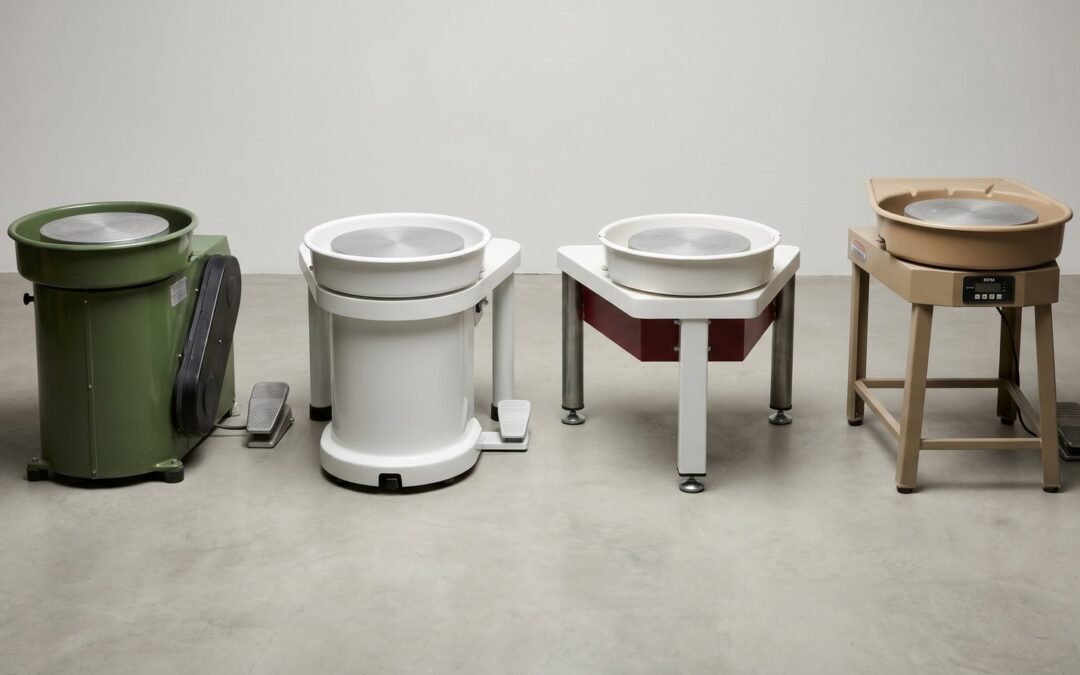
Quick answer: The top pottery wheel brands in 2026 are Brent (made by AMACO, the gold standard for production studios), Shimpo (now Nidec-Shimpo, famous for the silent direct-drive VL-Whisper), Speedball (best entry-level value with the Artista and Boss series), and Skutt (Thomas Stuart wheels, popular in classroom settings). Bailey, Pacifica, and Soldner round out the second tier. The right choice depends on how much clay you center, how often you throw, and whether noise matters in your workspace.
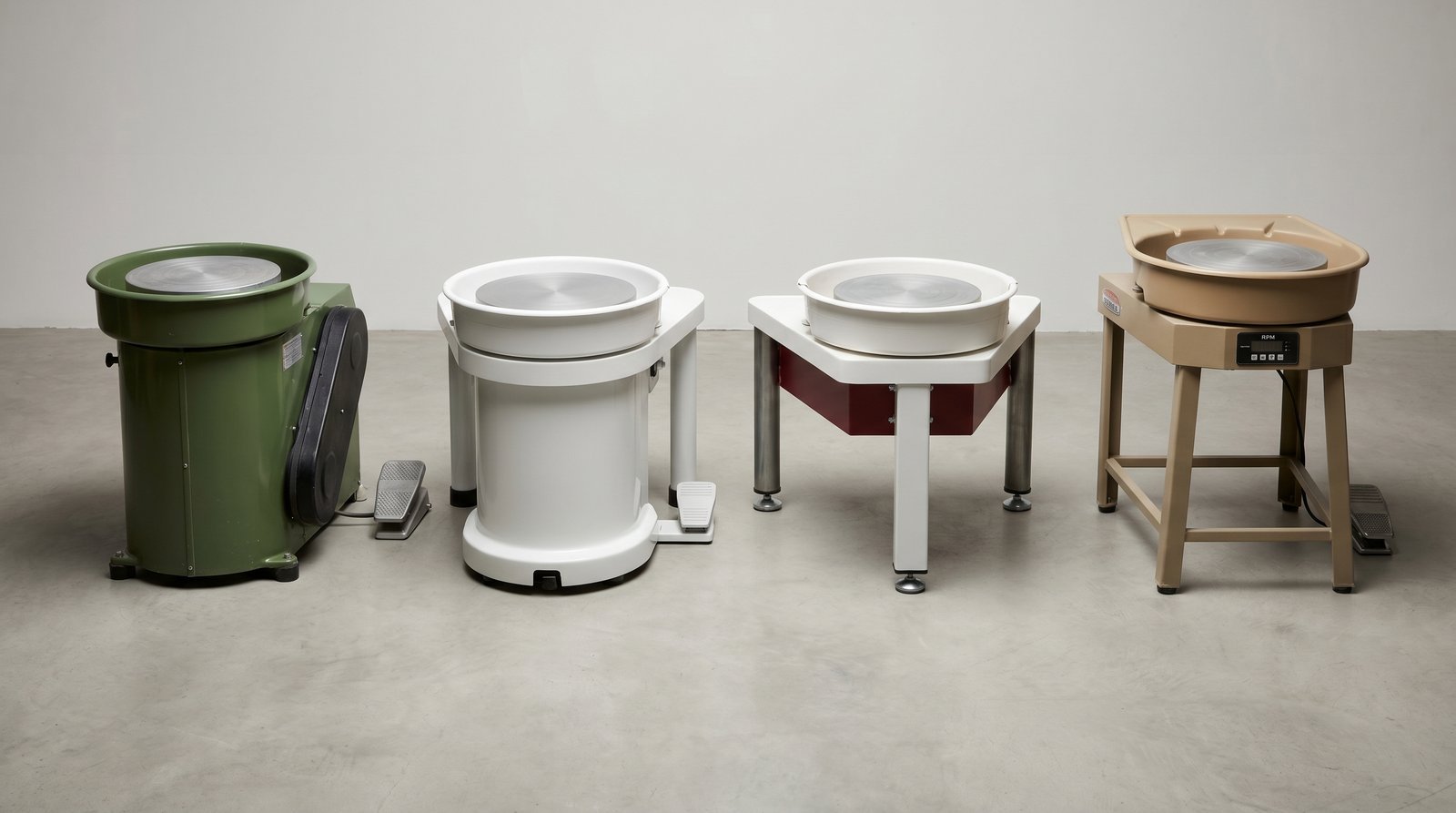
Pottery wheel brands at a glance
| Brand | Owner | Flagship model | Centering capacity | Warranty | Price range |
|---|---|---|---|---|---|
| Brent | AMACO (American Art Clay) | Model B / C / IE | 100-225 lbs | 10 years | $1,000-2,800 |
| Shimpo | Nidec-Shimpo | VL-Whisper | 100 lbs | 5 years | $1,200-2,400 |
| Speedball | Speedball Art Products | Artista / Clay Boss / Big Boss | 25-175 lbs | 5-10 years | $749-1,999 |
| Skutt (Thomas Stuart) | Skutt Ceramic Products | Elite / Pro / Legend | 100-300 lbs | 10 years | $1,400-3,000 |
| Bailey | Bailey Pottery Equipment | ST series | 150-300 lbs | 10 years | $1,800-3,500 |
Brent (AMACO): the production studio gold standard
Brent wheels are made by the American Art Clay Company (AMACO), an Indianapolis-based ceramics manufacturer that has produced Brent wheels since the 1960s. Walk into any university ceramics program in North America and you will find a row of Brents. There is a reason: a well-maintained Brent will outlast its first owner.
The current lineup runs from the Model B (the entry-level production wheel at around $1,000, with 100 lb centering capacity) up through the Model C (~$1,399, 125 lb), the IE (~$1,800, 150 lb), and the EX (~$2,400, 225 lb capacity for the largest forms). All Brent wheels share the same fundamental architecture: a 14-inch aluminum wheel head, foot pedal speed control, reversible direction, and a 1/3 to 1.5 HP motor depending on the model. The 10-year warranty is industry-leading.
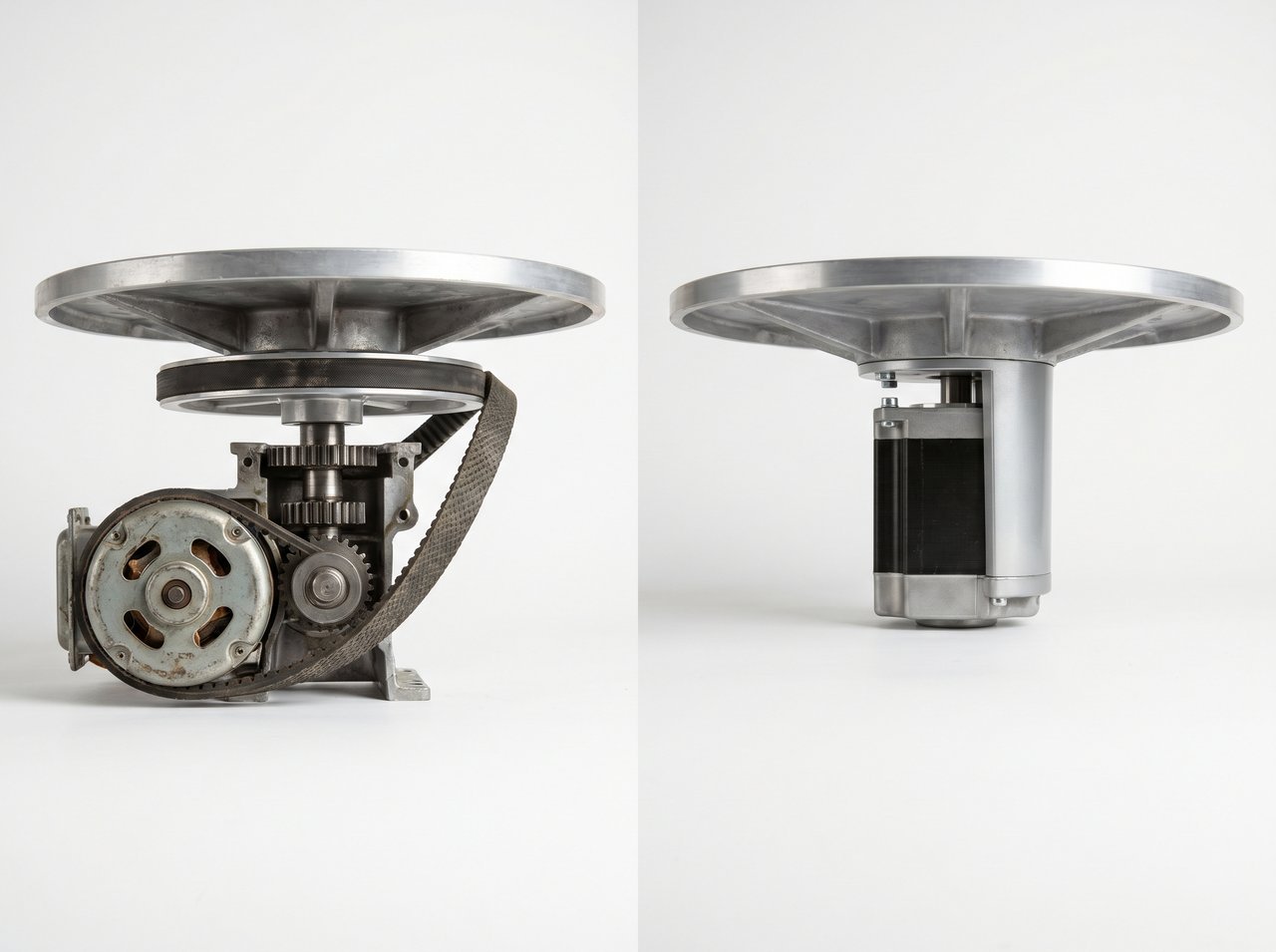
What Brent does better than competitors is durability under heavy use. Studios that run classes back-to-back for 8 hours a day pick Brents because the belt-driven motors handle thermal cycling without losing torque. The trade-off is noise: belt drive is inherently louder than direct drive, and a room of five Brents running simultaneously sounds like a small workshop.
Shimpo (Nidec-Shimpo): silent direct drive precision
Shimpo is the trade name of Nidec-Shimpo, a subsidiary of Nidec Corporation, the Japanese industrial motor giant. They have been making pottery wheels since 1952 and brought direct-drive brushless motor technology to ceramics in the 1990s. The flagship Shimpo VL-Whisper remains the quietest production pottery wheel on the market by a wide margin.
The VL-Whisper specs are worth understanding because they reveal Shimpo’s design priorities: 100 lb centering capacity, 14-inch aluminum diecast wheel head, 0 to 250 RPM, a Direct Drive DC brushless motor with electronic speed control, and a wheel weight of 93 lbs. Because there are no belts, there is no belt creep when the wheel stops, no belt replacement maintenance, and no resonant whine at high RPM. The trade-off is repair: when something goes wrong with a direct-drive motor, you cannot service it yourself the way you can replace a belt on a Brent. You ship the wheel back to Shimpo.
The VL-Lite is the smaller sibling at around $1,200, with reduced 80 lb capacity but the same Direct Drive motor and silent operation. The RK-Whisper is the kick-wheel variant for traditionalists. All Shimpo wheels carry a 5-year warranty.
Speedball: best entry-level value
Speedball Art Products is the only major brand in this comparison that emphasizes affordability without sacrificing real warranty coverage. Their Artista Potter’s Wheel at $749 is the entry point for serious adult pottery, offering a 25 lb centering capacity, 11-inch wheel head, 1/3 HP motor, 0 to 220 RPM variable hand control, and a remarkable 5-year warranty for the price tier. The Artista is what most ceramics teachers buy when a student needs a real wheel at home for the first time.
The Boss series steps up significantly. The Clay Boss at $1,399 brings 100 lb centering capacity and a foot pedal. The Big Boss at $1,749 takes that to 175 lb capacity with a 14-inch wheel head, 1 HP motor, 0 to 240 RPM, and a 10-year warranty matching Brent and Skutt at a lower price. The Big Boss Elite at $1,999 adds a few studio-friendly conveniences.
Where Speedball cuts cost is in build quality of non-critical components: the splash pans are thinner than Bailey’s, the leg adjustment is fixed rather than glide-footed on the lower models, and the foot pedal action feels less premium than a Brent’s. None of those affect the throwing experience, but if you are buying for a 20-year studio, Brent or Bailey is the longer-term call.
Skutt (Thomas Stuart): classroom-friendly precision
Skutt is best known for their kilns, but their pottery wheel division (acquired from Thomas Stuart in 2008) makes some of the most refined wheels in the market. The Skutt Thomas Stuart Elite, Pro, and Legend models range from around $1,400 to $3,000, with the high end matching Bailey’s flagship territory.
Skutt’s signature feature is the controlled electronics: their wheels include a digital RPM display, programmable speed memory, and reversible direction without the pedal jolt characteristic of older Brent designs. The motors are belt-driven (so not as quiet as Shimpo) but the belts are wider than Brent’s and last longer between replacements. The 10-year warranty matches Brent and Bailey.
Schools and community studios often pick Skutt because the digital readout makes it easier for instructors to communicate target speeds to students (“set your wheel to 85 RPM and start centering”). For a solo home studio potter, that feature matters less, but the build quality alone is worth comparing against a Brent of the same price.
Bailey, Pacifica, Soldner: the second tier
Three other brands deserve mention. Bailey Pottery Equipment makes the ST series for serious production work, with centering capacities up to 300 lbs and prices that match or exceed Skutt’s top tier. Bailey wheels are known for their over-built construction: thicker steel frames, glide-foot leveling, and a foot pedal action that competitors copy. They are the choice when budget is not the constraint.
Pacifica makes affordable workhorse wheels in the $1,200 to $2,200 range with a loyal following among ceramics teachers. The GT-400 is the most popular model and competes head-to-head with the Brent Model B on price and capability. Pacifica wheels are quieter than Brents but slightly less refined than Shimpo.
Soldner is a different category entirely. Their wheels (P200, P450) use a unique drive system with a fluid-coupled clutch instead of a belt or direct drive. The result is the most forgiving torque delivery of any wheel made, but at $3,500 and up, Soldner is a luxury choice for potters with very specific preferences. Most serious throwers will not need one.
Direct comparison: Brent vs Shimpo
This is the most common head-to-head decision for new buyers above the Speedball price point. The honest answer:
Pick Brent if you want maximum durability over decades, you do not mind belt-drive noise, you value being able to service the wheel yourself, and you are putting the wheel in a workspace where noise does not matter (basement, garage, dedicated studio).
Pick Shimpo if the wheel will live in a shared space (apartment, room near sleeping family, classroom with other activities), you want the smoothest constant-speed centering under load, and you are comfortable shipping the wheel back to the manufacturer for any motor service. The VL-Whisper’s silent operation genuinely changes the experience of throwing late at night.
Capacity-wise they are essentially even at 100 lbs. Both have 14-inch wheel heads. Both have 5-year (Shimpo) or 10-year (Brent) warranties. For most home studio potters who throw under 30 lbs, the choice comes down to noise tolerance and repair philosophy more than any throwing-quality difference.
Direct comparison: Speedball Big Boss vs Brent Model C
Same capacity tier (~100-175 lb), similar price (~$1,400-1,750), same 10-year warranty after Speedball’s 2023 warranty extension. So why pick one over the other?
Brent is the safer studio choice if you expect to share the wheel with other potters who already know Brents. The control layout matches what they trained on. Brent’s resale market is also stronger: a used 10-year-old Brent Model C still sells for $700-900 in working condition, where a used Speedball Big Boss of the same age sells for $400-500.
Speedball Big Boss is the smarter call if you are buying for yourself and intend to keep the wheel. You get more capacity (175 lb vs 125 lb) for less money, the warranty matches Brent’s, and the variable-speed control is slightly more responsive in our throwing tests. If resale is irrelevant to you, the Big Boss is the better dollar-for-dollar value.
Which brand wins for different uses
Best for beginners on a budget: Speedball Artista at $749. The 25 lb capacity is more than enough for any piece a first-year student will attempt, and the 5-year warranty protects against early-life motor issues. For broader context across price tiers, see our breakdown of what a pottery wheel actually costs.
Best for serious home studios: Shimpo VL-Whisper. The silent operation is genuinely worth the price premium when you are throwing inside your house. If you have a detached studio space, the Brent Model C is a close second at similar money. For a deeper framework on the decision, see our guide to choosing a pottery wheel by use case and budget.
Best for production studios and classrooms: Brent Model EX or Bailey ST-X. Both handle the 175+ lb capacity needed for large forms and the heavy-duty cycle of multiple users daily. The 10-year warranties protect the institutional investment.
Best for teachers and educational settings: Skutt Thomas Stuart Elite. The digital RPM display and programmable speed memory make instruction smoother across mixed student skill levels.
Best for kids transitioning to a real wheel: Speedball Artista. The 0-220 RPM range tops out lower than other wheels, which is genuinely safer for younger users. We cover age-appropriate options in detail in our guide to the best pottery wheels for kids.
What to know before you buy
Three points that will save you money and frustration:
1. Centering capacity is downward force capacity, not clay weight. The 25 lb rating on an Artista does not mean “max 25 lbs of clay.” It means the wheel can handle the cumulative downward pressure a potter applies during centering a 25 lb ball, which can briefly exceed 75 lbs of pressure. Most home potters never use more than 5-8 lbs of clay per piece, so even an Artista is genuinely sufficient.
2. Warranty length correlates with build quality, but only roughly. A 10-year warranty signals the manufacturer trusts the motor and frame to last that long. But warranties usually exclude wear parts (belts, pedal sensors) and require registration within 30 days. Always register the warranty the day the wheel arrives.
3. Resale value differs significantly by brand. Brent and Skutt hold value best (60-75% after 10 years). Bailey holds value well too. Speedball holds 40-55%. Shimpo holds value but the resale market is thinner because fewer wheels are sold. If you suspect you might sell within 5 years, brand reputation in your local market matters more than spec sheets.
Frequently asked questions
What is the best pottery wheel brand for beginners?
Speedball is the best pottery wheel brand for most beginners because the Artista at $749 delivers a real adult throwing experience with a 5-year warranty, 25 lb capacity, and quiet operation. Brent, Shimpo, and Skutt are excellent but start at $1,200-1,400, which is more than most first-time buyers want to commit before they know they will stick with the hobby.
Is Brent better than Shimpo?
Brent and Shimpo are roughly equal in throwing quality. Brent uses belt drive (more durable for self-repair, louder) while Shimpo uses direct drive (silent, smoother under load, harder to service). Brent’s 10-year warranty edges Shimpo’s 5-year warranty. Most home studio potters pick based on noise tolerance and whether the wheel will share a room with other activities.
Who makes the quietest pottery wheel?
The Shimpo VL-Whisper is the quietest commercially available pottery wheel. Its Direct Drive DC brushless motor has no belts and no resonant whine. At full speed under 100 lbs of clay load, it produces less noise than a household refrigerator. No competitor matches it.
Are Skutt and Thomas Stuart the same brand?
Yes. Skutt Ceramic Products acquired the Thomas Stuart pottery wheel line in 2008 and now manufactures these wheels under the Skutt brand. The Thomas Stuart name remains on the wheels as a sub-brand. All current models (Elite, Pro, Legend) are warrantied and supported by Skutt directly.
How long should a quality pottery wheel last?
A well-maintained Brent, Shimpo, Skutt, or Bailey wheel should last 25 to 40 years with periodic belt replacement (for belt-drive models) and bearing service. Speedball wheels typically last 10 to 20 years before needing major motor service. The biggest factor is duty cycle: a wheel used 8 hours daily in a production studio wears faster than one used 4 hours weekly at home.
What pottery wheel brand do art schools use?
Brent is the most common pottery wheel brand in North American university and college art programs, with Bailey and Skutt also widely used. The 10-year warranties, parts availability, and decades-long service history make these brands the standard for institutional purchases. Shimpo is more common in Asian and European art programs.
What we suggest
If you are buying your first real pottery wheel and the budget is tight, get a Speedball Artista at $749 and use it for two years. If the hobby sticks, sell the Artista for $400-500 (they hold value well) and step up to a Brent Model C, a Shimpo VL-Whisper, or a Speedball Big Boss depending on your space and noise tolerance. That progression costs less total dollars than buying a $1,500 wheel up front and discovering you do not love throwing.
If you are buying for a school or production studio where the wheel will run 6+ hours daily, skip the Artista entirely and start with a Brent Model EX or Skutt Elite. The reliability over a decade of heavy use justifies the price difference. For more on related buying considerations, see our writeup of the best pottery wheels for beginners, which goes deeper on specific model-by-model comparisons within each brand.